
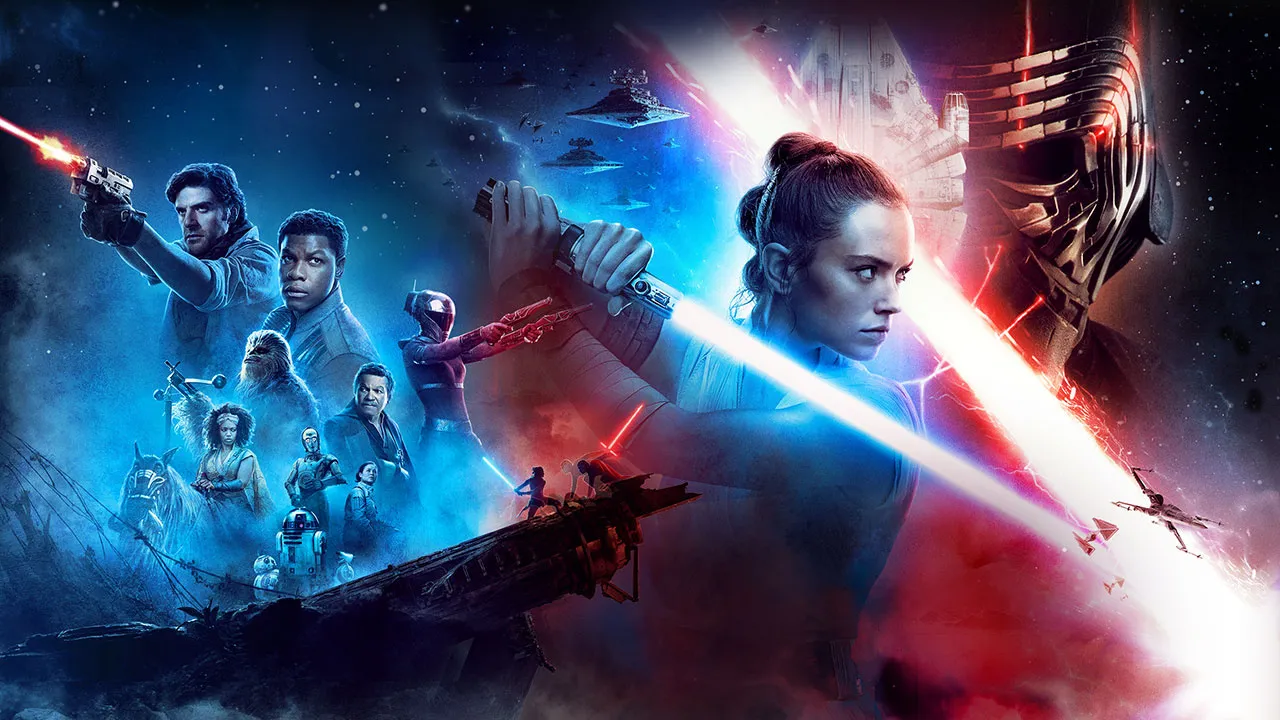
Star Wars is easy to get lost in: the story began with Episode IV, then gained prequels, sequels and standalone films, while the series filled the gaps between them. There’s no one-size-fits-all order. On a first watch, it’s better to keep the plot reveals intact; on a rewatch, you can follow the history of the galaxy from its earliest events to the end of the sequels.
Choosing a viewing order at a glance
| Goal | Order | What you get |
|---|---|---|
| First-time viewing | IV → V → VI → I → II → III → VII → VIII → IX | Keep the suspense and see the franchise unfold the way audiences discovered it. |
| The story in chronological order | I → II → III → Solo: A Star Wars Story → Rogue One: A Star Wars Story → IV → V → VI → VII → VIII → IX | Follow the story across generations without jumping back in time. |
| Just the main saga | The nine episodes | The Skywalker family’s complete journey, with no required spin-offs. |
| The films plus the key series | Add Star Wars: The Clone Wars, Obi-Wan Kenobi, Andor, The Mandalorian and Ahsoka | Get more context without having to watch every single title. |
Release order: the best option for a first watch
The saga wasn’t conceived as a straight chronology. The original trilogy introduces the world and its rules, the Force, the Empire and Luke Skywalker, with no need to know the family’s past in advance. The prequels then tell Anakin’s story, and the sequels deal with the aftermath of the Rebels’ victory. That’s why release order works better for a first viewing: the big twists land at the right moment.
- Star Wars: Episode IV – A New Hope
- Star Wars: Episode V – The Empire Strikes Back
- Star Wars: Episode VI – Return of the Jedi
- Star Wars: Episode I – The Phantom Menace
- Star Wars: Episode II – Attack of the Clones
- Star Wars: Episode III – Revenge of the Sith
- Star Wars: Episode VII – The Force Awakens
- Star Wars: Episode VIII – The Last Jedi
- Star Wars: Episode IX – The Rise of Skywalker
The films in chronological order
32 BBY
Episode I – The Phantom Menace
Anakin Skywalker’s childhood and the beginning of the Republic’s political crisis.
22 BBY
Episode II – Attack of the Clones
The start of the Clone Wars and Anakin’s growing bond with Padmé.
19 BBY
Episode III – Revenge of the Sith
The fall of the Republic, the birth of the Empire and Anakin’s transformation into Darth Vader.
10 BBY
Solo: A Star Wars Story
Young Han meets Chewbacca and gets the Millennium Falcon.
0 BBY
Rogue One: A Star Wars Story
The events end immediately before Episode IV.
0 ABY
Episode IV – A New Hope
Luke begins his journey as a Jedi, and the Rebels attack the Death Star.
3 ABY
Episode V – The Empire Strikes Back
The Empire pursues the heroes while Luke’s training continues.
4 ABY
Episode VI – Return of the Jedi
Palpatine’s downfall and the victory of the Rebel Alliance.
34 ABY
Episode VII – The Force Awakens
The First Order emerges, and Rey begins her search for Luke.
34 ABY
Episode VIII – The Last Jedi
The story of Rey and the Resistance continues right after Episode VII.
35 ABY
Episode IX – The Rise of Skywalker
The conclusion of the Skywalker saga.
BBY and ABY stand for Before and After the Battle of Yavin, that is, the destruction of the first Death Star in Episode IV. This dating system is useful for the chronology but not essential for watching: just remember that Rogue One comes right before A New Hope, and the sequels take place decades after the original trilogy.
Where the key series fit in the timeline
The series expand the story, but not all of them are essential. If your goal is to watch just the films, feel free to go straight from one movie to the next. If you want a deeper understanding of the characters and how the galaxy works, add the series at these points.
Between Episodes II and III
Star Wars: The Clone Wars
Shows the war itself, the friendship between Anakin and Obi-Wan, and Ahsoka’s journey.
After Episode III
Obi-Wan Kenobi
Brings back Obi-Wan and Darth Vader in the early days of the Empire.
Before Rogue One
Andor
A political, espionage-driven look at how the Rebel Alliance took shape.
After Episode VI
The Mandalorian
The story of the New Republic and Grogu after the fall of the Empire.
After The Mandalorian
Ahsoka
Continues the storylines of Ahsoka Tano, the rebels and the New Republic.
What’s essential and what you can skip
Essential for understanding the main story
These are the nine episodes of the Skywalker saga. Even if you like some of the films less than others, they provide context for the later generations of characters and explain the political history of the galaxy.
Worth adding after the main saga
Rogue One deepens the impact of Episode IV and works as a war drama about the cost of victory. Solo is a standalone adventure that doesn’t change the main saga but fills in its hero’s backstory. Star Wars: The Clone Wars matters most to viewers interested in Anakin, Obi-Wan and Ahsoka; the series explores the prequel era in far more detail than the films.
Standalone stories
Star Wars: Visions is an animated anthology that doesn’t have to follow canon. The LEGO projects are comedic takes on Star Wars. Pick them based on your mood instead of trying to fit them into the film timeline.
FAQ
What order should you watch Star Wars in for the first time?
For a first viewing, use the release order of the main saga: IV, V, VI, then I, II, III, and after that VII, VIII, IX.
Do you need to watch the series before the films?
No. The nine episodes work as a complete main story. You can add the series afterward, depending on your interest in a particular era or character.
What should you watch after Revenge of the Sith in chronological order?
Among the films, Solo comes next, followed by Rogue One and A New Hope. Among the series, Obi-Wan Kenobi and Andor are set in this period.








Leave a Reply