

A GPS running watch is about more than a pretty map after your workout. It helps you hold your pace, stay on course, manage your training load and tell when your body really needs rest. There’s no one-size-fits-all watch for runners: beginners care most about easy-to-follow workouts and a light case, marathoners about battery life and accurate pacing, and on the trails, maps and navigation are critical.
This roundup brings together running watches with different strengths. Prices are for the US market in US dollars; they vary with sales and configurations.
Quick picks by goal
| What you need | Best fit | Why |
|---|---|---|
| Start running without complicated menus | Garmin Forerunner 170 | Garmin Coach plans plus clear pace and recovery metrics. |
| A light watch with long GPS battery life | COROS PACE 4 | Low weight, dual-frequency GPS, breadcrumb navigation and strong battery life. |
| Save money without giving up AMOLED and GPS | Suunto Run | Low weight, dual-band GPS and the basic running tools. |
| Train for races | Garmin Forerunner 570 | Advanced analytics, multi-band GPS, music and training plans. |
| Run new routes | Garmin Forerunner 970 | Full-color maps, navigation and detailed training load metrics. |
| Ultra distances and mountains | Garmin Enduro 3 | Massive battery life, maps and solar charging. |
How to choose a GPS running watch
Think about how you run, not how many modes it has
The essentials for a run are time, distance, current and average pace, heart rate, laps and your route. That’s enough to start training on a plan instead of running “by feel” every time. Pricier models add race time predictions, recovery recommendations, training load tracking, pacing guidance and navigation.
Don’t buy a watch just because it lists dozens of sports. It’s far more useful to check whether you can easily switch screens mid-run, read big numbers and start an interval. In the rain, in freezing weather and with gloves on, physical buttons are usually more reliable than a touchscreen.
When you need dual-frequency GPS
Modern watches pick up signals from several satellite systems. For a park, a track or an open waterfront, that’s usually enough. In dense urban areas, forests, ravines and among cliffs, multi-band mode is more useful: the GPS track “cuts” corners less often, and your current pace jumps around less. You pay for that accuracy in battery life, so there’s no point keeping the most power-hungry mode on for every short outing.
Measure battery life in GPS hours
The advertised “days in smartwatch mode” are useful for everyday wear, but for a runner, battery life with GPS on matters more. Music, an always-on display, maps and dual-frequency positioning all cut runtime. For a few runs a week, 15–20 hours of GPS is enough; for a marathon, trail running or a vacation with routes to follow, you’re better off with at least 30 hours or a way to charge the watch quickly.
The best running watches
1. Lightweight all-rounder — COROS PACE 4
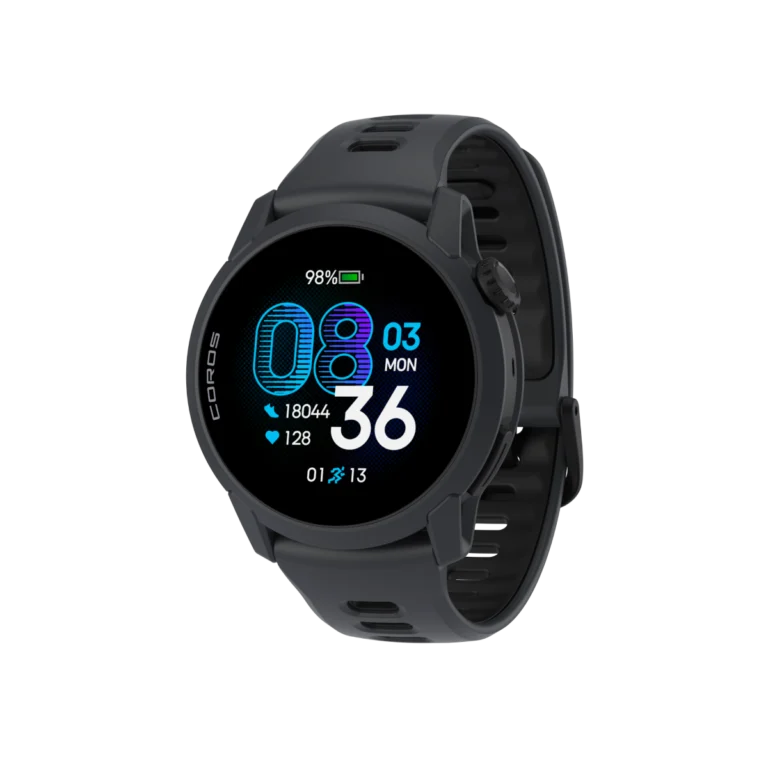
Best balance of weight and battery lifeGPS sports watch
COROS PACE 4
9.2/10
- Weight
- 32 g with the nylon band
- Display
- 1.2-inch AMOLED
- GPS
- All satellite systems and dual-frequency mode
- Battery life
- Up to 41 hours in GPS mode, up to 19 days of daily use
- Navigation
- Breadcrumb routes, no offline maps
RunningTrailTriathlon
Pricefrom $249
The pick for runners who want low weight, long workouts and navigation without stepping up to a premium price tier.
- Very light on the wrist
- Long GPS battery life
- Dual-frequency positioning and breadcrumb navigation
- Training plans, race predictor and virtual pacer
- Fewer everyday features than Garmin
- Some settings are easier to change in the app
- No offline maps, breadcrumb navigation only
The PACE 4 is comfortable to wear all day: with the nylon band, you barely feel it on your wrist. You notice this most on long runs, when a heavy case starts to get in the way. The watch suits regular training, first races and routes where you need navigation. It has tools for training plans, race time predictions, recovery and pacing.
2. Easy-to-use first running watch — Garmin Forerunner 170
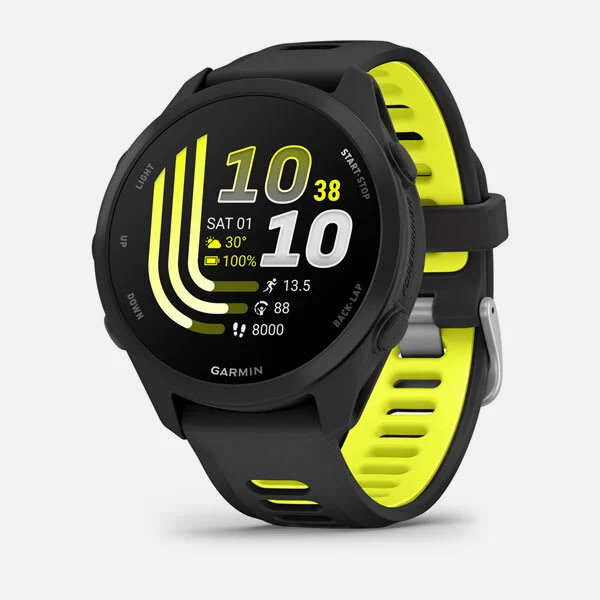
For getting into structured trainingGPS running watch
Garmin Forerunner 170
8.8/10
- Display
- 1.2-inch AMOLED
- GPS
- GPS and all satellite systems
- Battery life
- Up to 20 hours in GPS mode
- Training
- Garmin Coach, Training Status and Training Readiness
- Water rating
- 5 ATM
RunningCyclingSwimming
Pricefrom $299.99
An easy way into the Garmin ecosystem for anyone who wants to start running on a plan and see more than just distance.
- Easy-to-use interface and buttons
- Garmin Coach training plans
- Bright AMOLED display
- Garmin Pay contactless payments
- No multi-band GPS
- No built-in maps
- Shorter battery life than the COROS
The Forerunner 170 doesn’t try to replace an ultramarathon watch. Its strength is an easy on-ramp to regular training: key data, adaptive plans and recovery reminders. It’s a good fit for 5K to 10K distances, a first half marathon and mixing running with gym workouts, swimming or cycling.
3. Affordable road running watch — Suunto Run
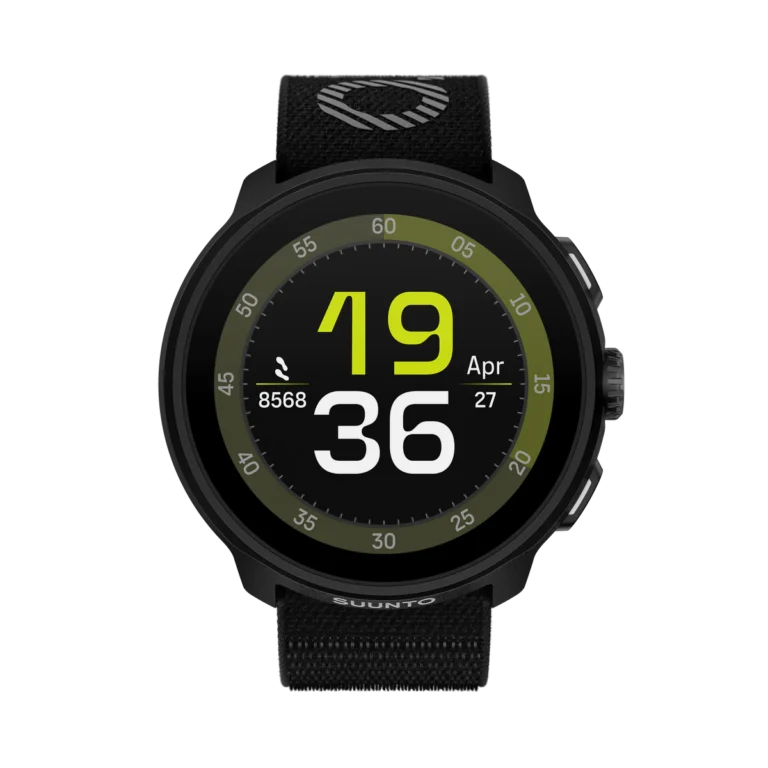
Affordable pick for runnersLightweight GPS watch
Suunto Run
8.5/10
- Weight
- 36 g
- Display
- AMOLED
- GPS
- Dual-frequency GPS
- Battery life
- Up to 20 hours of training, up to 12 days of daily use
- Features
- Ghost Runner, intervals, music controls
RunningRoad runningWorkouts
Pricefrom $199
A sensible choice for anyone who wants a light training tool without paying extra for advanced smart features.
- Low weight
- Dual-band GPS
- Bright display
- Useful running modes and intervals
- Less analytics and fewer smart features than Garmin
- No full-featured maps
- Not the best option for complex navigation
The Suunto Run bets on simplicity. You get interval workouts, training load tracking, recovery estimates and Ghost Runner — a pacing target that helps you stay on your planned pace. For a runner who sticks to roads and the track and wants a light watch, it’s a more logical choice than an all-purpose smartwatch.
4. For race prep and triathlon — Garmin Forerunner 570
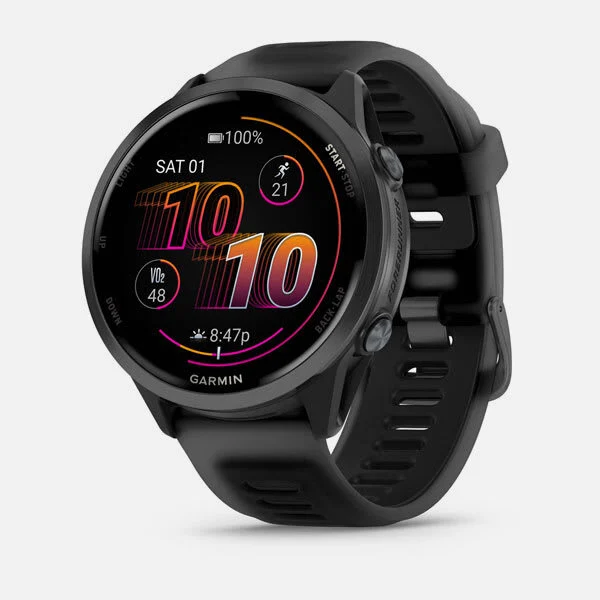
For consistent trainingAdvanced running and triathlon watch
Garmin Forerunner 570
9/10
- Display
- AMOLED, 42 or 47 mm
- GPS
- Multi-GNSS and multi-band
- Battery life
- Up to 18 hours in GPS mode and 11 days in smartwatch mode (47 mm); 42 mm: up to 10 days
- Storage
- 8 GB, phone-free music
- Training
- Triathlon Coach, Training Readiness and Training Status
RunningTriathlonCyclingSwimming
Pricefrom $549.99
The pick for athletes who need more than pace and distance: structured plans, accurate GPS and training load analysis between races.
- Multi-band GPS
- Advanced training and recovery metrics
- Music and contactless payments
- Two case sizes
- High price
- No built-in maps
- The bright display cuts into battery life
The Forerunner 570 comes into its own once your training is regular and varied: tempo work, long runs, bike rides, swims, triathlon. The watch looks beyond a single run to the big picture of training load and recovery. It’s worth choosing if you’re ready to use plans and analytics rather than just check your distance.
5. For routes and advanced analytics — Garmin Forerunner 970
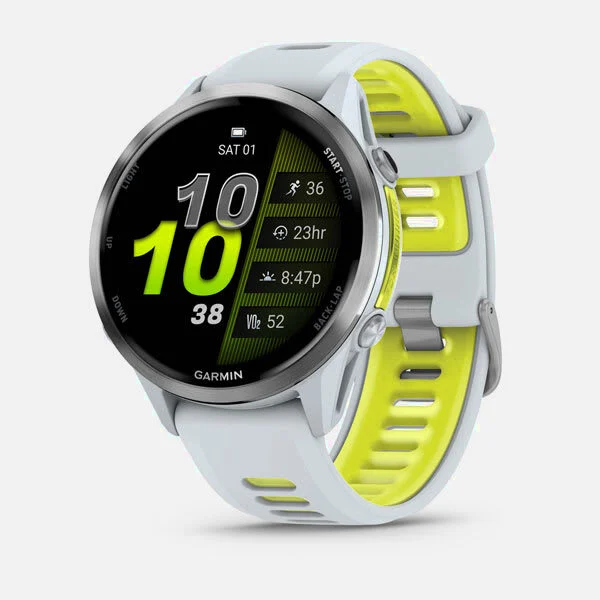
For races, routes and navigationPremium GPS watch
Garmin Forerunner 970
9.4/10
- Display
- 1.4-inch AMOLED
- GPS
- Multi-GNSS and multi-band
- Battery life
- Up to 26 hours in GPS mode, up to 15 days in smartwatch mode
- Navigation
- Built-in full-color maps and routes
- Storage
- 32 GB, phone-free music
RunningTrailTriathlon
Pricefrom $749.99
A premium option for anyone who wants to plan a race, follow a new route and dig into the training load afterward, all on one watch.
- Built-in full-color maps
- Accurate multi-band GPS
- Advanced running and recovery analytics
- Flashlight, music and 32 GB of storage
- Expensive
- The large case won’t suit every wrist
- Overkill for occasional short runs
The Forerunner 970 adds what more affordable running watches often lack: full maps right on your wrist. That’s handy in an unfamiliar city, while traveling and on trails, when you can’t keep pulling out your phone. It pays off with regular use, not with a couple of runs a month.
6. For trail running and very long distances — Garmin Enduro 3
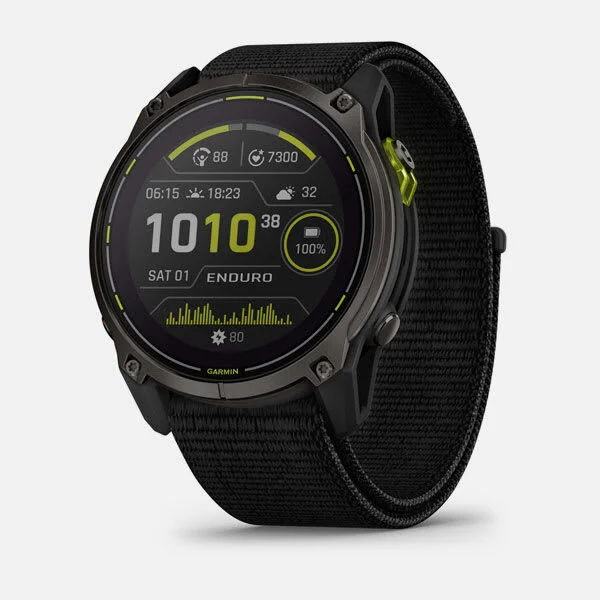
Maximum battery lifeTrail and ultra-distance watch
Garmin Enduro 3
9.3/10
- Display
- Transflective MIP
- GPS
- All satellite systems and multi-band
- Battery life
- Up to 120 hours in GPS mode, more with solar charging
- Navigation
- Maps, routes and elevation profile
- Water rating
- 10 ATM
TrailUltrarunningHikingCycling
Pricefrom $899.99
A specialized tool for long routes where battery reserve and sunlight readability matter more than a bright AMOLED screen.
- Exceptional battery life
- Maps and accurate positioning
- Solar charging
- Rugged case and 10 ATM water resistance
- Expensive and bulky
- The display is less striking than AMOLED
- More features than most city runners need
Think of the Enduro 3 not as “the best watch, period,” but as a specialized model. It makes sense for trail running, the mountains, ultramarathons, hiking and long bike rides, where the nearest outlet may be far away. The transflective display doesn’t look as bright indoors, but it’s easy to read in the sun and saves battery.
Features that actually matter
- Auto-pause and manual laps — for everyday city runs and intervals.
- Structured workouts — if you train on a plan rather than just piling up mileage.
- Chest strap support — for accurate heart rate zones.
- Routes and maps — for trail running, travel and running in a new neighborhood.
- Multisport — if you combine running with cycling or swimming, or you’re training for a triathlon.
- Phone-free music — a nice bonus, but not a reason to sacrifice GPS or battery life.
FAQ
Can you run with a smartphone instead of a watch?
Yes. Your phone will record your route, distance and pace. A watch is more convenient because you see the numbers you need at a glance without holding your phone, and your workout carries on without distracting notifications.
Are GPS watches accurate on a track?
On short laps, any GPS can be slightly off. For interval work on the track, it’s better to use a track mode if your watch has one, or go by the track markings and manual laps.
Do you need maps for everyday running?
If you always run in the same area, no. Maps are useful for travel, trail running, new routes and long runs.
Which is better: Garmin, COROS or Suunto?
Garmin offers a broad ecosystem of training and everyday features. COROS stands out for its mix of low weight, battery life and a sport-first focus, while Suunto suits those who want a minimalist running tool.









Leave a Reply