
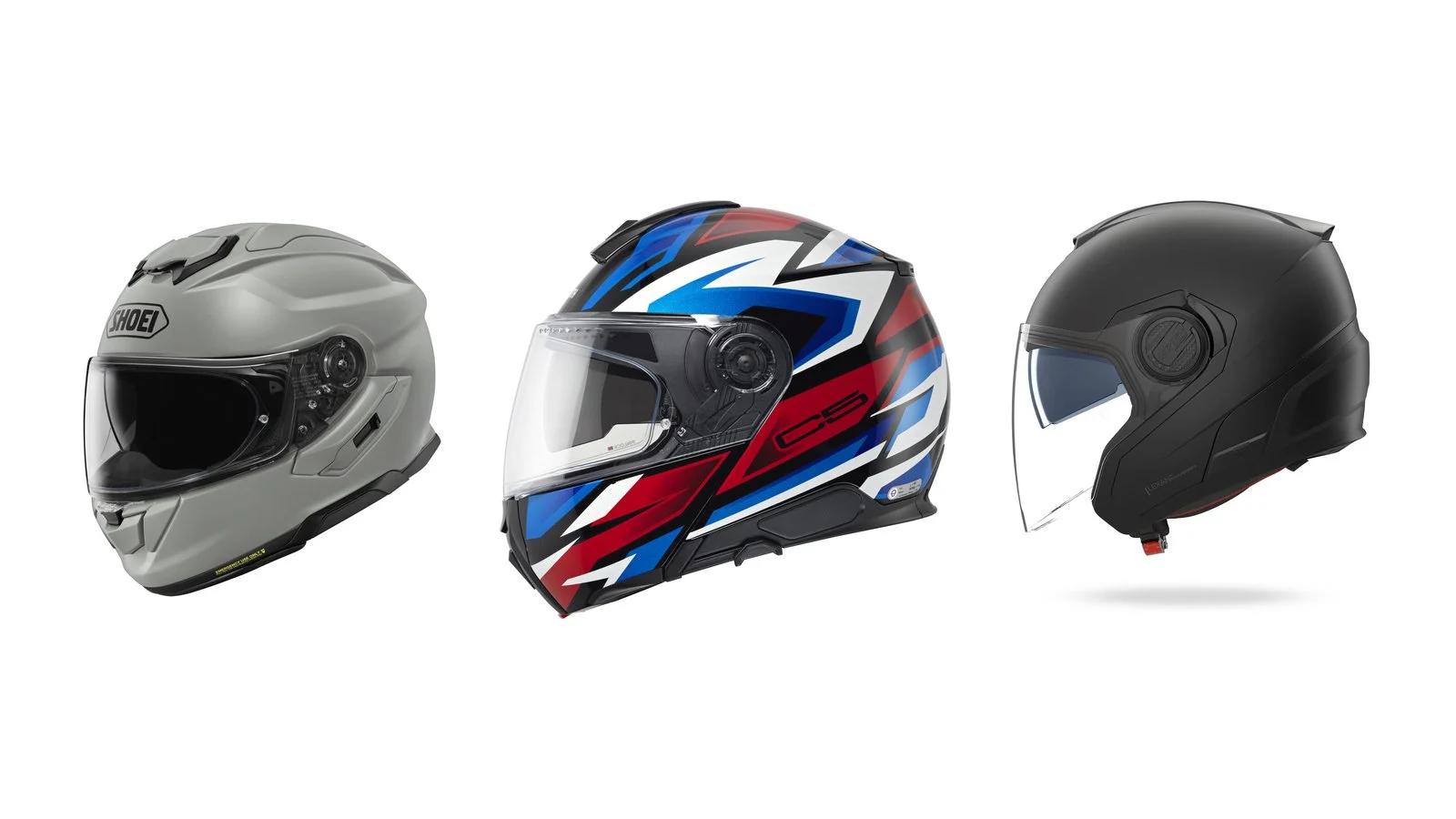
The best motorcycle helmets of 2026 in the full-face class are the touring Shoei GT-Air 3 and the lightweight AGV K6 S: both are ECE 22.06 certified and earned the top score, 5 out of 5 stars, in the UK’s SHARP safety rating. The budget AGV K1 S at €199 has the same five stars, and the best-equipped modular on the list is the Schuberth C5 with P/J homologation.
Below are 8 current helmets covering all the main types: full-face, modular, an adventure modular, open-face and motocross. For each one, you get the shell material, weight, certification, SHARP rating and official price as of September 25, 2026. After the list, there’s a comparison table, a sizing guide and an explanation of the ECE 22.06 label on the chin strap.
How we picked
- Current models. Only helmets listed on the makers’ official websites in September 2026.
- ECE 22.06 certification. All eight helmets are approved under the current series of UN Regulation No. 22.
- Independent rating. Where available, we list SHARP stars; SHARP doesn’t test open-face or motocross helmets.
- Every type and budget. Full-face, modular, adventure, open-face and motocross — from €199 to $779.99.
- Official prices. Prices from official stores and manufacturers’ recommended prices as of September 25, 2026.
These aren’t results of our own testing: we haven’t tried these helmets on, and we compare data from the manufacturers and SHARP. Euro prices come from the brands’ official European stores; Shoei only publishes prices in its US store. Dealer prices in other countries differ.
1. Shoei GT-Air 3
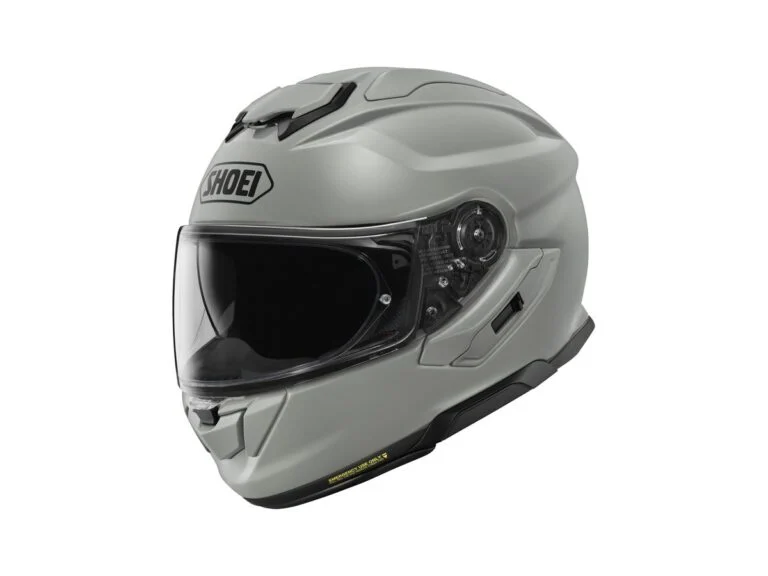
Best for touringTouring full-face helmet
Shoei GT-Air 3
- Type
- full-face with a built-in drop-down sun visor
- Shell
- AIM — fiberglass and organic fibers, 3 shell sizes
- Weight
- about 1.7 kg
- Certification
- ECE 22.06 in Europe, DOT in the US
- SHARP
- 5 out of 5 stars, tested June 2024
- Visor
- CNS-1C, Pinlock insert included
- Intercom
- Shoei Comlink slot for the SENA SRL3, sold separately
- Warranty
- 5 years (Shoei Europe)
Price$779.99, graphics from $879.99checked 25 September 2026
For riders who spend a lot of time on highways and trips: a full-face helmet with a sun visor, a built-in intercom slot and the top SHARP rating.
- 5 SHARP stars
- Sun visor and Pinlock insert included
- Intercom fits in with no external unit
- Most expensive helmet on the list
- About 1.7 kg — heavier than the sporty K6 S
- SENA SRL3 intercom sold separately
The GT-Air 3 is a touring full-face helmet with a QSV-2 internal sun visor that, according to Shoei, covers 5 mm more than its predecessor’s, and a CNS-1C visor that blocks more than 99% of UV rays. The shape was refined in a wind tunnel: compared with the GT-Air 2, drag is 6% lower and lift is 11% lower. Cheek pads come in four thicknesses, from 31 to 43 mm.
In Shoei’s official US store, the solid-color GT-Air 3 costs $779.99, and graphic versions start at $879.99. The US version is DOT-certified and the European one is ECE 22.06, but Shoei doesn’t publish European prices on its website. There’s also the GT-Air 3 SMART, a version prepared for the EyeLights head-up display in the visor, which is sold separately.
2. AGV K6 S
LightestSport-touring full-face helmet
AGV K6 S
- Type
- full-face
- Shell
- carbon and aramid, 4 shell sizes
- Weight
- 1,255 g in the first shell size
- Certification
- ECE 22.06
- SHARP
- 5 out of 5 stars, tested June 2024
- Visor
- 190° horizontal field of view, Pinlock 120XLT insert included
- Ventilation
- 5 adjustable front vents
- Warranty
- 2 years, 5 years with registration
Price€449, graphics up to €569checked 25 September 2026
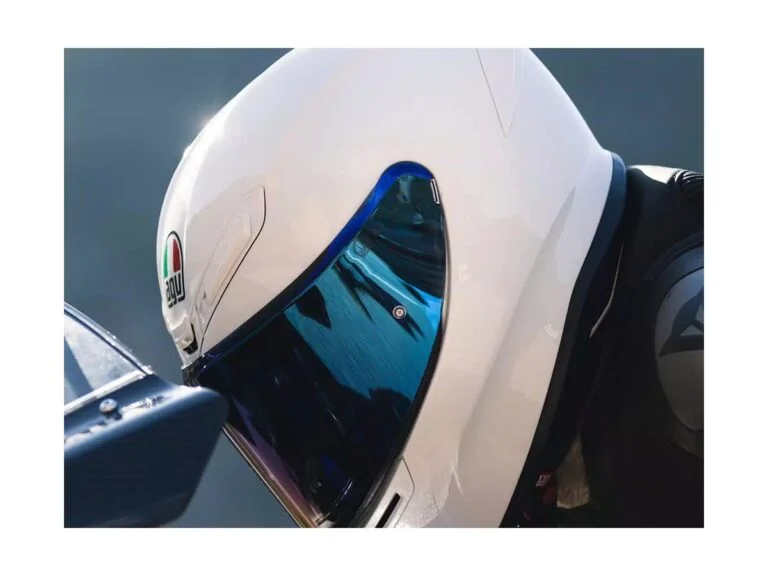
For riders who split their time between city streets and highways and want a light helmet: AGV calls the K6 S the world’s lightest full-face road helmet.
- 5 SHARP stars
- 1,255 g — the lightest helmet on the list
- Pinlock 120 insert included
- No built-in sun visor
- More than twice the price of the K1 S, same rating
The K6 S is designed for any kind of road riding, from the city to long trips. The carbon-aramid shell comes in four sizes, and the EPS liner has five densities. According to AGV, in ECE 22.06 testing the helmet did 36% better than the limits in linear impacts and 65% better in oblique impacts.
In AGV’s official store, solid-color K6 S helmets cost €449, matte ones €479, and graphic versions up to €569.
3. AGV K1 S
Best budget pickBudget full-face helmet
AGV K1 S
- Type
- full-face
- Shell
- thermoplastic, 2 shell sizes
- Weight
- 1,500 g in the first shell size
- Certification
- ECE 22.06
- SHARP
- 5 out of 5 stars, tested September 2024
- Visor
- 190° horizontal field of view, Pinlock 70 ready, insert not included
- Ventilation
- 5 front vents and 2 rear exhausts
- Warranty
- 2 years, 5 years with registration
Price€199, graphics from €239checked 25 September 2026
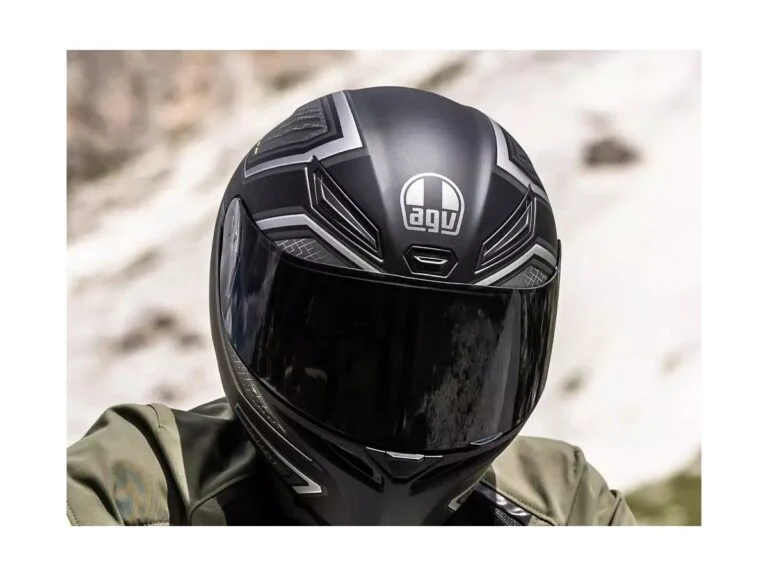
For a first helmet and everyday riding: at €199, the K1 S has the same SHARP rating as the K6 S and the Shoei GT-Air 3.
- 5 SHARP stars for €199
- Ready for an intercom
- Removable, washable liner
- No built-in sun visor
- Pinlock insert sold separately
- 245 g heavier than the K6 S
The K1 S is the most affordable helmet on the list and a good example of how protection doesn’t always track price: SHARP gave the thermoplastic K1 S the same 5 stars as the carbon K6 S. For comparison, the LS2 FF353 Rapid, certified to the older ECE 22.05, got 2 stars in a 2019 SHARP test.
In AGV’s official store, the black K1 S costs €199, the matte black one €209, and graphic versions start at €239. On a tighter budget, look at the HJC C10: €109.90 in HJC Europe’s official store and 4 SHARP stars.
4. Schuberth C5
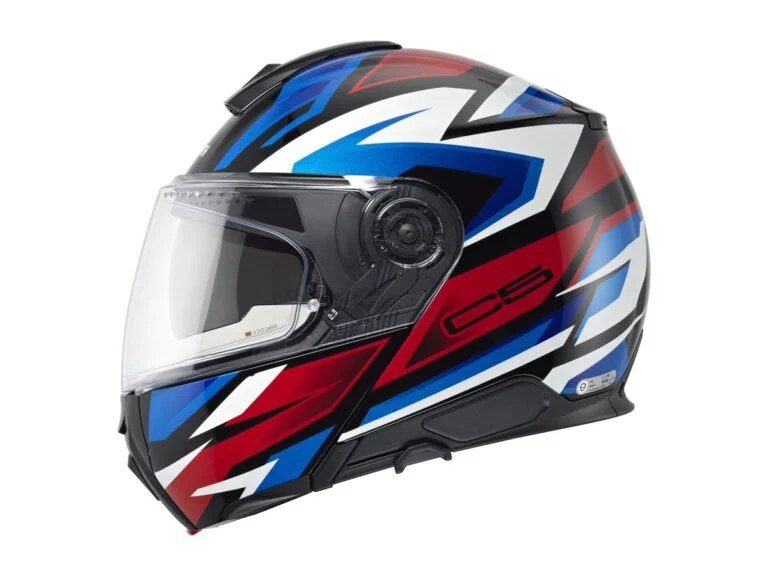
Best-equipped modularModular helmet
Schuberth C5
- Type
- modular, P/J homologation
- Shell
- DFP fiberglass reinforced with carbon, 2 shell sizes
- Weight
- 1,660 ± 50 g in size 59
- Certification
- ECE 22.06
- SHARP
- 4 out of 5 stars, chin bar latch score 100%
- Noise
- 85 dB(A) at 100 km/h on a naked bike (Schuberth data)
- Intercom
- SC2 speakers and antennas pre-installed, SC2 unit sold separately
- Sizes
- XS (53) to 3XL (65), XXS (51) in two colors
Price€699, other colors and graphics €729–799checked 25 September 2026
For long trips with frequent stops: the C5 is certified for riding with the chin bar closed or raised, and the intercom speakers and antennas are already in the shell.
- P/J homologation
- Intercom speakers and antennas built in
- Chin bar latch: 100% in SHARP tests
- 4 SHARP stars vs 5 for the full-face picks
- SC2 intercom unit sold separately
- Heavier than a full-face: 1.66 kg in size 59
Schuberth introduced the C5 in 2021, and in 2026 it’s still a current model, alongside the C5 Carbon and C5 ANC. The maker calls it the first helmet with dual P/J homologation under ECE 22.06. The A.R.O.S. system helps keep the helmet from rolling off your head, and the visor remembers its position when you raise and lower the chin bar.
In SHARP tests, the C5’s chin bar never opened. In Schuberth’s official store, solid-color C5 helmets cost €699, Concrete Grey and Fluo Yellow €729, and graphic versions €799.
5. Shark Oxo
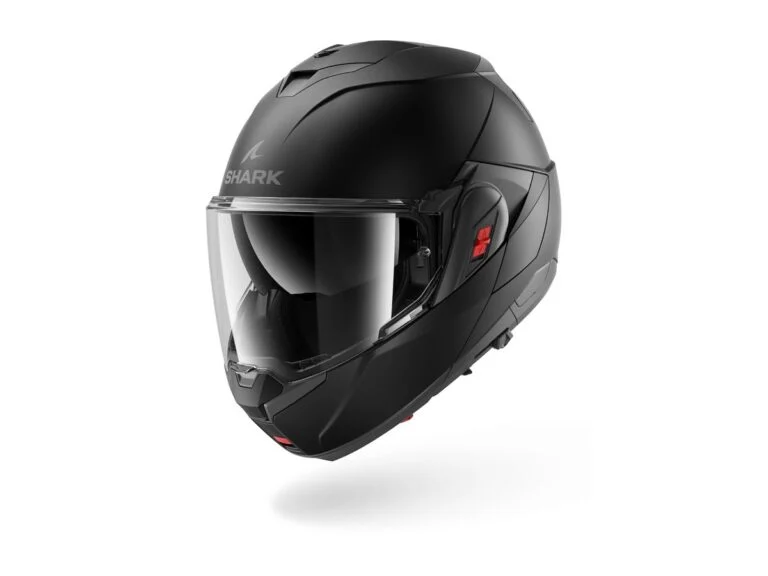
Budget modularFlip-back modular helmet
Shark Oxo
- Type
- modular, chin bar rotates 180° to the back, P/J homologation
- Shell
- Lexan polycarbonate, 2 shell sizes
- Weight
- 1,660 g in the first shell size
- Certification
- ECE 22.06
- SHARP
- 4 out of 5 stars, chin bar latch score 100%
- Visor
- Pinlock 70 insert included, UV380 sun visor
- Intercom
- compatible with SENA and Sharktooth
- Warranty
- 5 years
Price€349.99 (solid-color Oxo Blank)checked 25 September 2026
For riders who want a P/J modular at half the price of the Schuberth C5: when open, the chin bar swings to the back and doesn’t hurt aerodynamics.
- P/J homologation for €349.99
- Pinlock 70 and sun visor included
- Chin bar latch: 100% in SHARP tests
- 4 SHARP stars vs 5 for the full-face picks
- Chin isn’t protected in open mode
The Oxo is a flip-back modular: the 2 DIGIT UNLOCK button releases the chin bar, which then rotates 180° to the back so it doesn’t spoil aerodynamics in open mode. P/J homologation means you can ride that way, but as SHARP points out, with the chin bar up your face and chin are no better protected than in an open-face helmet.
In SHARP tests, the Oxo’s chin bar never opened. In Shark’s official store, the solid-color Oxo Blank costs €349.99, half the price of the Schuberth C5.
6. HJC i80
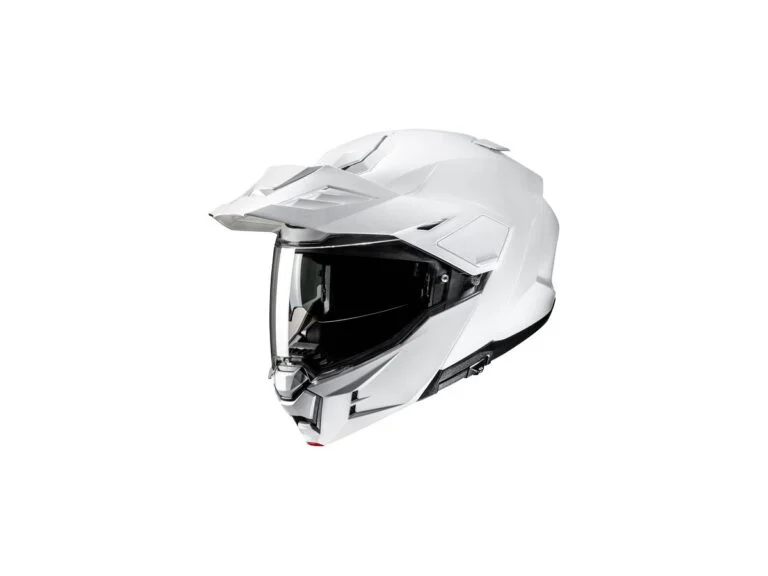
For pavement and dirt roadsAdventure modular helmet
HJC i80
- Type
- modular with a peak, peak is removable
- Shell
- polycarbonate-based composite (APC)
- Weight
- about 1.4 kg (SHARP data)
- Certification
- ECE 22.06
- SHARP
- 4 out of 5 stars, tested April 2026, chin bar latch score 90%
- Visor
- HJ-44, blocks 99% of UV rays, ready for an anti-fog insert
- Sun visor
- HJ-V12 with anti-fog and anti-scratch coating
- Warranty
- 3 years from purchase or 5 years from manufacture, whichever comes first
Price€259.90, graphics €299.90checked 25 September 2026
For trips on pavement and dirt roads: a peak, a flip-up chin bar and a sun visor for under €300.
- 4 SHARP stars, tested in 2026
- Peak comes off for highway riding
- Built-in sun visor
- Chin bar latch 90% vs 100% for the C5 and Oxo
- HJC doesn’t list P/J — check the label
The i80 is an adventure-style modular: it has a peak for dirt roads that comes off before a highway ride, a sun visor and adjustable chin ventilation. SHARP tested the helmet in April 2026 and gave it 4 stars; the chin bar stayed closed in 90% of impacts.
HJC’s model page doesn’t say whether the i80 has P/J homologation, so check the label on the chin strap before buying — SHARP recommends doing this with any adventure modular. HJC’s recommended price is €259.90 for solid colors and €299.90 for graphics.
7. Nolan N40-5 06
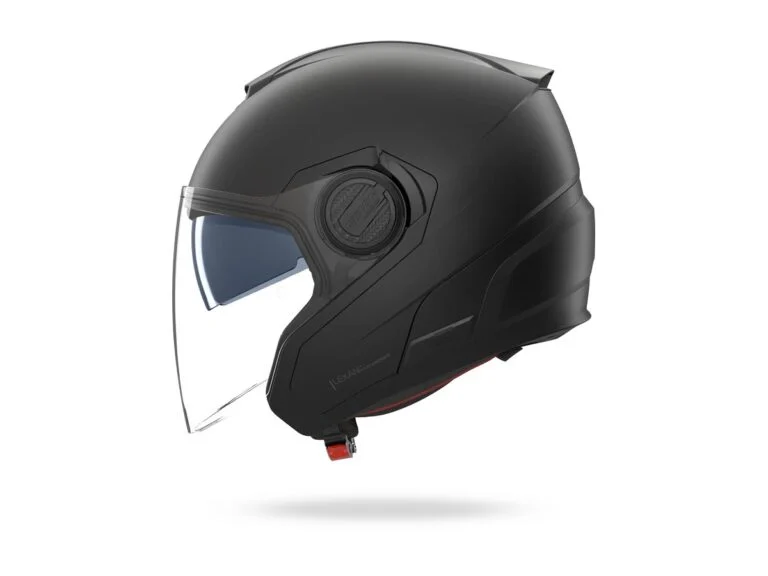
For the city and scootersOpen-face (jet) helmet
Nolan N40-5 06
- Type
- open-face (J), long visor
- Shell
- Lexan polycarbonate, one shell size
- Weight
- 1,350 g
- Certification
- ECE 22.06
- SHARP
- doesn’t rate open-face helmets
- Visor
- Ultrawide, scratch-resistant on both sides
- Sun visor
- VPS with anti-fog coating
- Intercom
- N-Com compatible
- Sizes
- XXS–XXXL, 53–65 cm
- Warranty
- 5 years
Price€229.99checked 25 September 2026
For the city, scooters and maxi-scooters: an open-face helmet with a long visor and a sun visor.
- Long visor shields the face from wind
- Sun visor, glasses-friendly
- N-Com intercom compatible
- Doesn’t protect the face and chin
- One shell size for every helmet size
An open-face helmet is convenient in the city, but it leaves your face and chin unprotected in a fall, as SHARP also points out. The N40-5 is an urban jet helmet: the long, wide visor shields your face from wind, and the anti-fog sun visor helps on bright days. Nolan makes it with one shell size for every size from XXS to XXXL.
In Nolan’s official store, the solid-color N40-5 06 costs €229.99. If you’re still choosing how to get around town, see our article “Is it worth getting an electric bike?”.
8. Airoh Twist 3
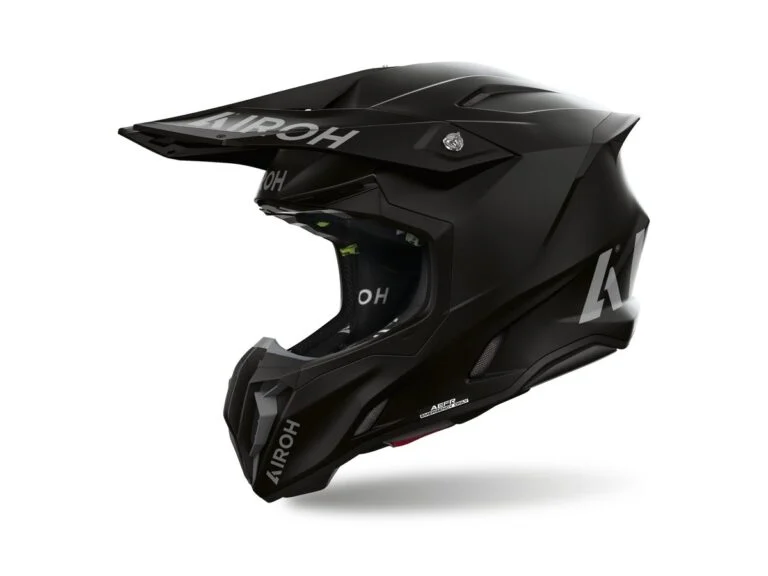
For motocross and enduroMotocross helmet
Airoh Twist 3
- Type
- motocross, with a peak, no visor, made for goggles
- Shell
- HRT thermoplastic, 2 shell sizes
- Weight
- from 1,330 ± 50 g
- Certification
- ECE 22.06
- SHARP
- doesn’t rate motocross helmets
- Closure
- double D-ring
- Liner
- removable, washable, hypoallergenic
- Intercom
- ready for the Airoh AWC2 and AWC4, sold separately
Price€209.99 (Twist 3 Color), graphics €249.99checked 25 September 2026
For motocross, enduro and off-road riding: an affordable motocross helmet with ECE 22.06 certification.
- ECE 22.06 certification
- Two shell sizes
- Ready for an Airoh intercom
- Needs goggles: there’s no visor
- SHARP doesn’t test motocross helmets
A motocross helmet is built differently from a road helmet: there’s no visor, goggles protect your eyes, and a peak sits on top. The Twist 3 is Airoh’s affordable model, with an HRT thermoplastic shell in two sizes and ventilation that, according to the maker, was tuned in a wind tunnel.
SHARP doesn’t rate motocross helmets, so ECE 22.06 certification is the main safety benchmark here. In Airoh’s official store, the solid-color Twist 3 Color costs €209.99 and graphic versions €249.99.
Best motorcycle helmets: comparison
| Model | Type | Weight, g | SHARP | Price | Best for |
|---|---|---|---|---|---|
| Shoei GT-Air 3 | Full-face | ≈1,700 | 5 of 5 | $779.99 | Touring and highways |
| AGV K6 S | Full-face | 1,255 | 5 of 5 | €449 | A light everyday helmet |
| AGV K1 S | Full-face | 1,500 | 5 of 5 | €199 | First helmet, budget up to €200 |
| Schuberth C5 | Modular P/J | 1,660 | 4 of 5 | €699 | Long trips |
| Shark Oxo | Modular P/J | 1,660 | 4 of 5 | €349.99 | Budget modular |
| HJC i80 | Adventure modular | ≈1,400 | 4 of 5 | €259.90 | Pavement and dirt roads |
| Nolan N40-5 06 | Open-face | 1,350 | not rated | €229.99 | City and scooters |
| Airoh Twist 3 | Motocross | from 1,330 | not rated | €209.99 | Motocross and enduro |
How to find the right helmet size
Fit matters more than the brand: SHARP stresses that even a 5-star helmet won’t protect you if it comes off in a crash. According to the European COST 327 crash study cited by SHARP, 12% of helmets came off during a crash. Check the size and fit step by step.
Measure your head
Wrap a soft tape measure around your head about 2 cm above your eyebrows, just above your ears and around the back of your head. Keep the tape level and don’t squeeze. Measure two or three times, ideally with someone helping.
Result: You know your head circumference in centimeters.
Find your size in the brand’s chart
Sizes vary between brands: SHARP warns that one maker’s M may differ from another’s. For example, a 55 cm head is an XS at Nolan but an S at Airoh. If you fall between sizes, Nolan and Shark recommend the smaller one, since the padding compresses slightly over time.
Result: You have a size from the chart for that specific model.
Check the fit
Put the helmet on and fasten the strap so you can still open and close your mouth. The helmet should touch your whole head without pressure points or red marks — wear it for a few minutes. Then turn it side to side and tilt it forward and back: your cheeks should move with the helmet, and the helmet itself shouldn’t slip.
Result: The helmet fits snugly without pressing or slipping.
Make sure it won’t come off
With the strap fastened, tilt your head forward and ask someone to gently push the helmet up from the base at the back. If the helmet rolls off in the store, it can come off in a crash too — try another size or model.
Result: The helmet doesn’t roll off your head.
What ECE 22.06 means
ECE 22.06 is the 06 series of amendments to UN Regulation No. 22 on motorcycle helmets and their visors. The regulation is developed by the WP.29 World Forum at the UN Economic Commission for Europe (UNECE) and applied in 43 countries; the new series took effect on January 3, 2021. UNECE says a quality helmet cuts the risk of death more than sixfold and the risk of brain injury by up to 74%.
The key difference from the previous 22.05 version is oblique impacts. According to UNECE, 22.05 tested helmets with impacts perpendicular to the surface, while 22.06 adds angled impacts: they’re closer to real crashes and show how well a helmet protects the brain from rotational acceleration. What else 22.06 checks:
- Different speeds and impact points. On top of the standard 7.5 m/s impacts, helmets are tested with impacts at 8.2 and 6 m/s, plus at extra points.
- Visors. Visor tint and material are checked, photochromic visors have their own test, and a helmet with a built-in sun visor is tested with the sun visor down.
- Accessories. The approval stays valid only with accessories, such as intercoms, that were tested with the helmet during certification.
A certified helmet has a label sewn onto the chin strap with an E in a circle, the approving country’s number and the approval number, whose first two digits, 06, mean the 22.06 series. After the slash comes the type: J for open-face, P for a protective chin bar, P/J for a modular certified to ride with the chin bar closed or raised, and NP for a lower face cover that doesn’t protect the chin.
Since July 2023, 30 months after 22.06 took effect, countries applying the regulation must prohibit marking new helmets with approvals under the old 22.05 series, and since January 2024 they may ban the sale of helmets that don’t meet 22.06. So when buying a helmet, look at the first two digits of the approval number.
How to choose a motorcycle helmet
Helmet type
- Full-face (P) — the chin bar is part of the shell. The choice for highways, sport riding and most trips.
- Modular (P or P/J) — the chin bar flips up. If you want to ride with it raised, you need a P/J marking; with P alone, raise the chin bar only when stopped.
- Adventure — under the regulation this isn’t a separate type but a full-face or modular helmet with a peak for dirt roads.
- Open-face (J) — the face and chin aren’t protected. An option for the city and scooters.
- Motocross — no visor, made for goggles, with a peak. For motocross and off-road riding.
SHARP stars
SHARP is a UK Department for Transport program. Helmets for testing are mostly bought from stores, and each model goes through 32 impacts — 30 linear and 2 oblique — on seven samples in different sizes. The hardest impacts are at 8.5 m/s, more than ECE 22.06 requires (8.2 m/s).
The result is 1 to 5 stars, and for modular helmets SHARP also shows the share of impacts in which the chin bar stayed closed. SHARP only tests full-face and modular helmets, so open-face and motocross helmets have no stars.
Shell material and weight
Carbon and aramid make a helmet lighter: the carbon AGV K6 S weighs 1,255 g, the thermoplastic K1 S 1,500 g. But as SHARP notes, the shell material is only part of the design, and the EPS liner and padding matter just as much, which is why both helmets got 5 stars. A lighter helmet is easier on your neck on long rides.
Visor, sun visor and intercom
The GT-Air 3, C5, Oxo, i80 and N40-5 have a built-in sun visor; the AGV K6 S and K1 S don’t. A Pinlock anti-fog insert comes with the GT-Air 3, K6 S and Oxo. For intercoms, helmets with built-in provisions are more convenient: Shoei’s Comlink for the SENA SRL3 or Schuberth’s pre-installed SC2 speakers and antennas. SHARP notes that a visor letting through less than 50% of visible light doesn’t meet the standards.
Sources and methodology
Analysis of public sourcesChecked 25 September 2026
- UNECE — UN Regulation No. 22, 06 series of amendments unece.org
- UNECE — press release on the helmet standard, February 18, 2025 unece.org
- SHARP — helmet safety ratings sharp.dft.gov.uk
- SHARP — how the tests work sharp.dft.gov.uk
- SHARP — how to get the right fit sharp.dft.gov.uk
FAQ
What is the safest motorcycle helmet?
There’s no single answer: first, the helmet has to fit and carry ECE 22.06 certification. Among the helmets on this list, the Shoei GT-Air 3, AGV K6 S and AGV K1 S received SHARP’s top score of 5 stars.
Can you ride a modular helmet with the chin bar up?
Only if the chin strap label says P/J, meaning the helmet is certified for riding in both positions. With P alone, raise the chin bar only when stopped. And even with P/J, your chin isn’t protected in the open position.
How often should you replace a motorcycle helmet?
According to SHARP, manufacturers recommend replacing a helmet after 3 to 5 years, or sooner if you ride often, because the padding compresses and the helmet fits more loosely. A helmet that has fallen on a hard surface or been in a crash should be replaced right away, even if there’s no visible damage.
Which size should I choose if I’m between two?
Nolan and Shark recommend the smaller one, since the padding compresses slightly over time. What matters most is that the helmet doesn’t press and doesn’t roll off your head during the check, so try on both sizes.
How is ECE 22.06 different from ECE 22.05?
22.06 adds an oblique impact test that measures the head’s rotational acceleration, as well as high- and low-energy impacts, extra impact points and new requirements for visors and accessories. Since July 2023, new helmets in countries that apply the regulation are no longer marked with approvals under the old 22.05 series.




Leave a Reply