
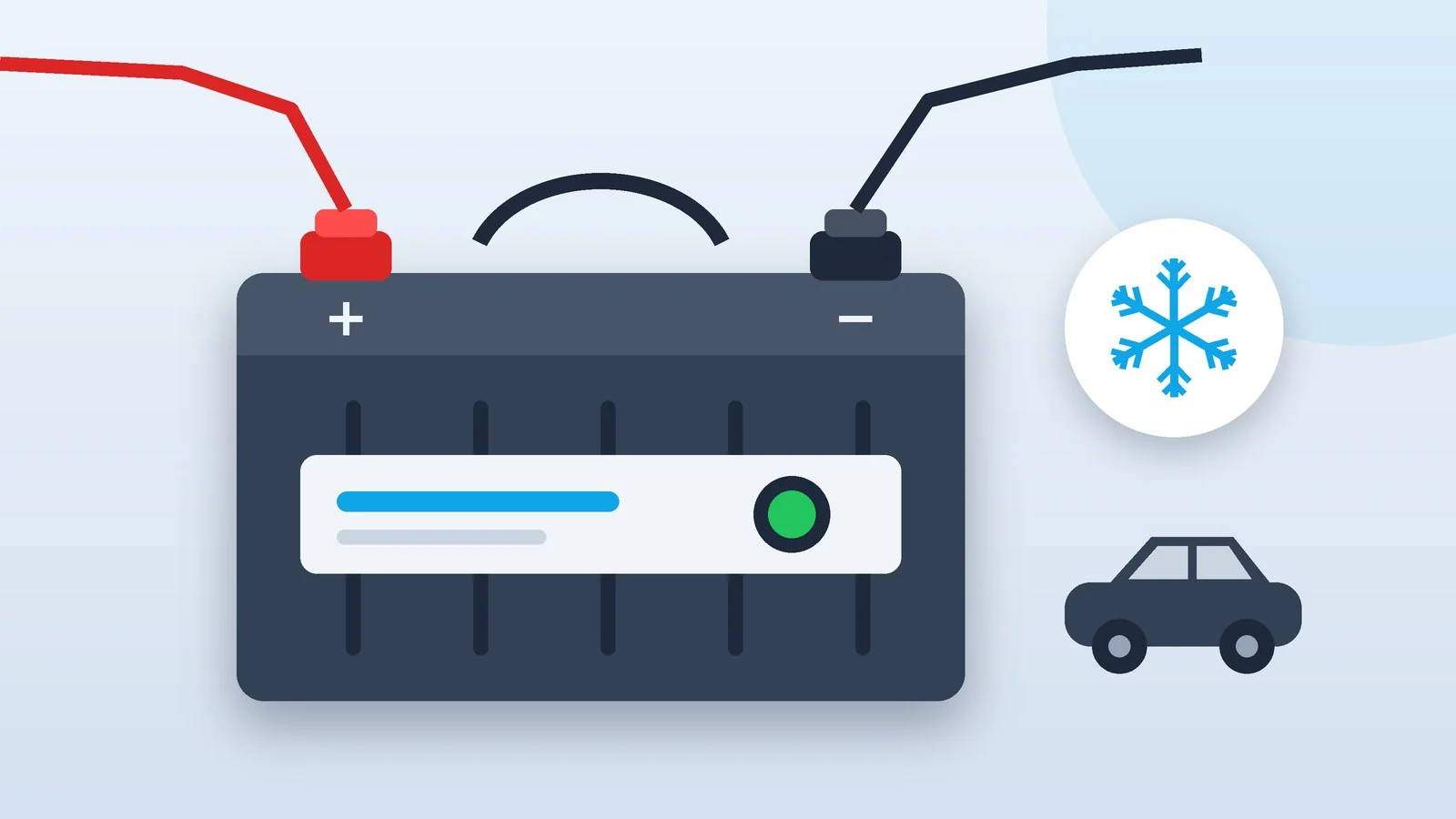
To choose the right battery for your car, start from the factory-fitted one. The new battery should match it in technology, size, polarity, terminals and hold-down, and its capacity and cold cranking amps should be no lower than the factory figures. If the car has a start-stop system, you need an EFB or AGM battery, and an AGM can only be replaced with another AGM.
Below are six steps: where to find the specification, how conventional, EFB and AGM batteries differ, how to read the label and why cranking ratings under EN and SAE can’t be compared directly. You’ll also find prices as of October 1, 2026, a freshness check before you buy, battery registration in the car’s electronics and where to take the old battery.
Find out which battery the car came with
The main reference is the carmaker’s requirements: VARTA states plainly that the vehicle manufacturer’s recommendations are what matter when you replace a battery. Look for them in the owner’s manual and on the label of the battery in the car. Japan’s GS Yuasa advises always checking the marking of the installed battery before you buy; it is printed on the lid or on a sticker.
On a European battery label, look for the capacity in amp-hours and the cold cranking amps with the standard noted, for example EN; EFB and AGM batteries also name the technology. There is often a nine-digit ETN code that lets you cross-check the figures: in VARTA code 560 901 068, “60” means 60 Ah and “068” is the 680 A cranking current divided by 10.
If the label is unreadable or the battery is no longer the original, use a battery maker’s finder tool. For example, the VARTA Battery Finder searches by make, model, year and engine and shows where the battery sits in the car.
Result: You know the technology, capacity, cold cranking amps, size and polarity of the factory battery.
Choose the technology: conventional, EFB or AGM
Which battery suits a car best depends first of all on whether it has start-stop. While the engine is off, almost all the electronics run on the battery without help from the alternator, and most of these cars also recover braking energy. The European standard EN 50342-6 says outright that such batteries are stressed in a completely different way from classic starter batteries.
Hence VARTA’s short rule: a car with start-stop needs an EFB or AGM. A conventional battery in that slot wears out quickly, and failure is inevitable. GS Yuasa adds that with a conventional battery, start-stop may not work properly and fuel consumption may rise, and GS Yuasa’s warranty does not cover such a battery.
Start-stop is no longer a luxury-car feature. In the technical data for the 2026 Škoda Octavia, it is listed together with energy recuperation for both the TSI gasoline engines and the TDI diesels. We covered how these engines differ otherwise in Diesel or Gasoline: Which Engine Should You Choose.
| Technology | Which cars | Cycle life (VARTA) | Limitation | 60 Ah VARTA price, UAH |
|---|---|---|---|---|
| Conventional (SLI) | No start-stop | Baseline | Not for start-stop | 3,879–4,400 |
| EFB | Basic start-stop, many consumers | Twice a conventional battery | Can’t replace AGM | 5,324–5,900 |
| AGM | Start-stop with recuperation, premium | 3× a conventional battery | Most expensive of the three | 7,000–8,798 |
| Gel (GEL) | Not for engine starting | — | Weak cranking current | — |
| Lithium-ion | Niche, e.g. Porsche 911 GT3 S/C | — | Only if the carmaker approves | — |
EFB is an enhanced flooded battery: its positive plates carry a layer of non-woven fleece, and it withstands twice as many charge and discharge cycles as a conventional battery. In an AGM battery, the electrolyte is fully absorbed in a glass-fiber mat. According to VARTA, it lasts three times as many cycles as a conventional battery and delivers current well in the cold.
Without start-stop, a conventional battery is enough: the VARTA Dynamic SLI, for example, is maintenance-free, so there is no water to top up. Specs for conventional batteries often show Ca/Ca, meaning lead-calcium plates that lose little water. VARTA also recommends EFB for cars without start-stop if they have a lot of electrical equipment or face tough driving conditions.
AGM helps with frequent short trips. Over short distances the alternator can’t put back what the battery has given, and the charge balance goes negative, especially in winter with the headlights, heaters and fan on. According to VARTA, an AGM battery can run partially charged without harming its service life.
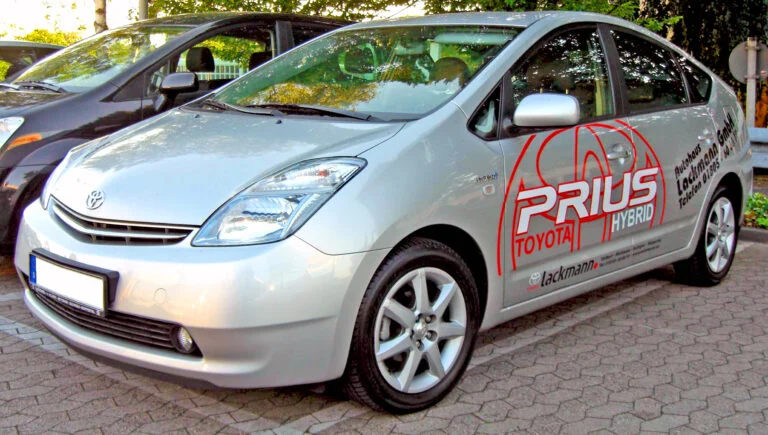
Hybrids also have an auxiliary 12-volt battery. In Toyota hybrids it is often installed in the cabin or trunk, so they use sealed VRLA batteries, a group that includes AGM. GS Yuasa warns that a conventional battery must not go in that spot. We explained how the different types of hybrids work in What is a hybrid car.
Gel batteries are not meant for starting engines: VARTA calls them supply batteries that cannot deliver high cranking current in the cold. Lithium-ion starter batteries are still a niche: the 40 Ah battery in the Porsche 911 GT3 S/C, for example, saves about 4 kg. Fit lithium instead of a lead-acid battery only if the carmaker allows it.
Result: You know which technology your car needs: conventional, EFB or AGM.
Match the size, polarity and terminals
European case sizes are set by the EN 50342-2 standard. The main series is 175 mm wide and 190 mm high, while the length grows with capacity, from L1 to L6 (also labeled LN1–LN6). There are also low cases, 175 mm high, marked LB. Asian cases built to the Japanese JIS standard are taller, and the B series is also noticeably narrower.
| Case | Length × width × height, mm | VARTA example |
|---|---|---|
| L2 (LN2) | 242 × 175 × 190 | 60 Ah AGM, 680 A |
| L3 (LN3) | 278 × 175 × 190 | 72 Ah, 600 A |
| L4 (LN4) | 315 × 175 × 190 | 80 Ah AGM, 800 A |
| L5 (LN5) | 353 × 175 × 190 | 95 Ah AGM, 850 A |
| L6 (LN6) | 394 × 175 × 190 | 105 Ah AGM, 950 A |
| LB1, low | 207 × 175 × 175 | 43 Ah, 370 A |
| D23 (JIS) | 232 × 173 × 225 | 60 Ah, 540 A |
| B24 (JIS) | 238 × 129 × 227 | 45 Ah, 430 A |
Polarity: “direct” and “reverse”
Stand the battery with the terminals facing you. Positive on the right is layout 0 in VARTA’s technical data, and Ukrainian shops call this polarity “reverse” (R+). Positive on the left is layout 1, or “direct” polarity (L+). Mix them up, and the factory cables may not reach the terminals, so the safest check is to compare the new battery with the old one.
On Japanese batteries, polarity is part of a code such as 55B24L. As GS Yuasa explains, 55 is the performance rank, B is the case cross-section (width and height), 24 is the approximate length in centimeters, and the final letter, L or R, shows the terminal position.
Terminals and hold-down
European terminals (type 1 at VARTA) are tapered posts 19.5 mm across on the positive and 17.9 mm on the negative. Some Asian batteries have thin terminals (type 3): 14.7 mm and 13.1 mm. An Asian case can also come with standard terminals, so check the terminal type separately from the size: cable clamps are made for a specific diameter.
Look at the bottom of the case too. European batteries have a ledge there that a clamp bar presses down on: VARTA marks a 10.5 mm ledge with the code B13 and a case without a ledge with B00. If your car holds the battery by the ledge, a case without one can’t be secured.
Result: The new battery will fit the factory slot, the cables will reach the terminals and the hold-down will secure it.
Check the capacity and cold cranking amps
Almost all car batteries today are 12-volt, so you compare two other figures. Under EN 50342-1, capacity is measured with a 20-hour discharge at 25 °C down to 10.5 V: a 60 Ah battery must deliver 3 A for 20 hours. The cold cranking current shows whether the battery can handle a cold start.
For the EN 50342-1 test, the battery is cooled to −18 °C for at least 24 hours and must then deliver its rated current so that the voltage is at least 7.5 V after 10 seconds. According to VARTA, the whole test lasts more than a minute. Ukraine uses the same standard, DSTU EN 50342-1:2022, so battery specs there usually give the EN figure.
Why EN, SAE and JIS ratings can’t be compared
The American SAE J537 standard sets a different condition: at the same −18 °C, the voltage must stay above 7.2 V for 30 seconds. The old German DIN requires at least 9 V after 30 seconds. Japan’s JIS has its own method too. So the same battery gets different numbers under different standards, and VARTA warns that SAE and JIS values are not comparable with EN.
American specs also list reserve capacity (RC): how many minutes the battery can sustain 25 A. VARTA’s technical data for European batteries doesn’t include it, so when choosing in Ukraine, go by capacity and the EN cold cranking current.
Can you go for more amp-hours?
Choose capacity and cold cranking amps no lower than the factory figures: GS Yuasa recommends a battery that is no worse than the original in size, polarity and performance rank. Going higher is fine if the battery fits the factory slot and can be secured. In cars with a battery management system, the new capacity and technology must be entered during registration (step 6).
At the same capacity, cranking current depends on the technology: among the 60 Ah VARTA batteries above, it is 540 A for the conventional, 640 A for the EFB and 680 A for the AGM. This reserve matters most in winter: VARTA notes that, with 20 °C as the optimum, a battery’s chemical reactions run half as fast at 10 °C and a quarter as fast near 0 °C.
But it is mainly heat that kills a battery: high temperatures speed up self-discharge and aging. According to VARTA, a conventional battery responds to severe cold and heat with a rapid loss of capacity, while an AGM copes with extreme temperatures too.
Result: The new battery’s capacity and cold cranking amps are no lower than the factory ones and are rated to the same standard.
Check the manufacturing date and voltage
A lead-acid battery slowly discharges on its own, even on the shelf, and faster in the heat. If it is not recharged for a long time, sulfation sets in and some capacity is lost for good. According to VARTA, damage from deep discharge can at best be fixed by a charger with a reconditioning mode.
So look for the manufacturing date on the case or label: some makers print it openly, others encode it, so ask the seller to decode it. For storage, VARTA advises checking the voltage every two months and recharging the battery if it drops to 12.5 V, so a battery made long ago should have been recharged.
Before buying, ask the seller to measure the voltage or check it with a multimeter. A fully charged battery at rest reads about 12.7–12.8 V. At 12.5 V or lower, charge the battery before installing it, and below 12.4 V VARTA advises charging it as soon as possible.
For EFB and AGM batteries, voltage alone isn’t enough: according to VARTA, start-stop batteries are checked for both state of charge and state of health (SOH). This takes a tester that supports these technologies, with the technology, standard and cranking rating set correctly.
Result: The battery is fresh and charged: about 12.7–12.8 V at rest.
Install the battery and recycle the old one
Put on safety glasses. When removing the old battery, disconnect the negative (ground) cable first so the wrench can’t short the positive terminal to the body. Connect the new one in reverse order: red cable to the positive terminal first, then black to the negative.
A start-stop battery is linked to the car’s electronics through a sensor and a battery management system (BMS). VARTA lists the brands where a new battery must be registered with a diagnostic tool: Alpina, Audi, BMW, Jaguar, Jeep, Land Rover, Mazda, MINI, SEAT, Škoda and Volkswagen. Without registration, or with a mistake in it, start-stop may be restricted or switched off and comfort functions cut back.
For Volkswagen Group cars and BMWs, registration requires a code for the specific battery. Some scan tools instead ask you to pick the capacity, manufacturer and technology, so it’s important to enter exactly the battery you fitted. Battery maker Banner adds that without registration, the new battery may be overcharged.
After the swap, other systems sometimes need to be set up again, such as sensors and comfort functions. Keep the receipt and the warranty card: you will need them if the battery develops a problem.
Don’t throw the old battery away. Ukraine’s National List of Waste marks lead batteries as hazardous (code 16 06 01*), and the Law “On Waste Management” lists batteries and accumulators among the waste taken by separate collection points. A dedicated law on batteries is still being drafted. Take the old battery to such a point or ask the seller whether they accept it.
Result: The battery is installed and registered, and the old one has gone for recycling.
Common mistakes when choosing a car battery
- Choosing by amp-hours alone. Capacity says nothing about the technology or cold cranking amps: VARTA’s 60 Ah batteries range from 540 to 680 A. Compare every parameter with the factory battery.
- Fitting an EFB or conventional battery instead of an AGM. VARTA allows only AGM for AGM, while swapping an EFB for an AGM is possible.
- Comparing cranking ratings from different standards. The SAE and EN numbers for the same battery differ, so compare by EN.
- Getting the polarity or terminals wrong. Check the layout (0 for positive on the right, 1 for positive on the left) and the terminal diameter against the old battery.
- Buying a battery that sat discharged for a long time. Check the date and voltage: about 12.7–12.8 V is normal; at 12.5 V or lower, charge it first.
- Forgetting registration. In Audi, BMW, Škoda, Volkswagen and other cars on VARTA’s list, start-stop may stop working without it.
- Replacing the battery when it isn’t the problem. If the new one also drains quickly, check whether the alternator is charging it.
Sources and methodology
Analysis of public sourcesChecked 1 October 2026
- DSTU EN 50342-1:2022 (EN 50342-1:2015, IDT) online.budstandart.com
- VARTA — EFB and AGM differences varta-automotive.com
- VARTA — battery registration in the BMS varta-automotive.com
- GS Yuasa — battery codes and selection (JIS, EN) gyb.gs-yuasa.com
- Law of Ukraine “On Waste Management” No. 2320-IX zakon.rada.gov.ua
FAQ
Which car battery is better: AGM or EFB?
The one your car came with. AGM is built for start-stop with recuperation and heavy loads: according to VARTA, it handles three times as many cycles as a conventional battery, while EFB handles twice as many. An AGM can only be replaced with an AGM, but an EFB may be upgraded to an AGM.
Can I fit a battery with a higher capacity?
Yes, if it uses the same technology and polarity, fits the factory slot and can be secured, and its cold cranking amps are no lower than the original’s. In cars where the battery is registered in the BMS, enter the new capacity during registration.
How do I tell a battery’s polarity?
Stand the battery with the terminals facing you. Positive on the right is “reverse” polarity, layout 0 in the European code; positive on the left is “direct,” layout 1. The surest way is to compare it with the battery in the car.
What voltage should a new car battery have?
A fully charged battery at rest reads about 12.7–12.8 V. At 12.5 V or lower, charge it before installing, and if the voltage is below 12.4 V, VARTA advises charging the battery as soon as possible.
Does a new battery need to be registered?
In cars with a battery management system, yes. VARTA names Alpina, Audi, BMW, Jaguar, Jeep, Land Rover, Mazda, MINI, SEAT, Škoda and Volkswagen. Without registration, start-stop may not work, and according to Banner, the new battery may be overcharged.







Leave a Reply