
What to check when buying a used car in Ukraine: documents and seller; the car’s VIN and plate history in Interior Ministry (MVS) and MTIBU services; liens and seller debts in Justice Ministry registers; then its condition at the viewing, on a test drive and at an independent garage. Only the deal runs a full check against closed state registers — at an MVS service center or in the Diia app — so pay then.
Below are 10 steps in a practical order: what each official service shows and what it misses, what the services cost as of October 5, 2026, what to check on a new car from a dealer, a summary checklist and what to do if a check turns up a problem.
Assess the listing and the seller
The MVS lists typical signs of a fake listing: a below-market price and artificial hype (“discounts today only,” “urgent sale, relocating”), a demand for prepayment or an advance, refusal to meet in person or to have the car checked at a garage, contact only through messengers, disabled comments and a promise to complete the deal officially without the buyer.
Ask for the VIN and plate number before you meet: according to the MVS, a refusal to share the VIN may point to fraud. Check how long ago the seller’s profile was created and how many listings it has, and run the car’s photos through a reverse image search — that is how photos lifted from other listings are found.
Find out right away who owns the car. It can be sold by the owner named in the registration certificate or by a representative with a notarized power of attorney. ADAC advises caution if the seller doesn’t match the owner in the documents and says they are selling “for a relative”: dealers posing as private sellers often hide this way.
Decide on the engine type in advance: diesel and gasoline differ in running costs and weak spots — see our breakdown diesel or gasoline: which to choose.
Result: You have the VIN, the plate number and the owner’s name and have agreed on a viewing and a garage inspection.
Check the documents and the VIN
A car’s main document in Ukraine is the vehicle registration certificate (the “tekhpasport”): an old-style paper one, a plastic card or an electronic version in Diia. There is no separate vehicle passport (PTS) as in Russia. Ask for the original certificate and the seller’s passport and compare the name, make, model, color, plate number and VIN.
A free MVS Main Service Center tool verifies the certificate by its series and number or by the plate number. Certificates issued before 2013 are not in the electronic database, so they can’t be checked online.
The VIN on the body and on the factory plate must match the document character for character. Signs of grinding, welding or fresh paint around the number, or a replaced plate, are a reason to walk away: if MVS experts confirm tampering, the car won’t be registered.
If a representative is selling, check the notarized power of attorney: a notary can tell you free of charge whether it is still valid, using the Unified Register of Powers of Attorney. It is safest when the owner comes to the deal in person.
Result: The documents are genuine, the VIN matches, and the seller is the owner or a representative with a valid power of attorney.
Run the car through MVS and MTIBU services
The MVS Driver’s Cabinet offers a paid “Перевірка транспортного засобу” (vehicle check): for UAH 54.82 you get a PDF by VIN with the date of first registration, the number of previous owners, the date and service center of the last registration, the make, model, year, engine size and fuel type. The report contains no owners’ personal data.
Stolen cars are searched for on the MVS wanted-records site in the “Транспортні засоби у розшуку” (wanted vehicles) section. The National Police also publishes data on stolen cars, including VINs, as an open dataset and updates it more than once a day.
Check the MTPL policy on the MTIBU website: open the “Domestic” tab, under “Choose the search criteria” pick “Number plate,” “Insurance policy number” or “VIN code,” enter a date and click “Verify.” The service shows whether a contract is valid on that date and which company issued it. What to do with the policy after the purchase is covered in our article on two MTPL policies for one car.
An owner can get a free insurance history report from MTIBU: claims and accidents involving the cars they owned over the past seven years, for the period of ownership. Ask the seller to generate it online — sign-in is with an electronic signature, including Diia.Signature. The report covers only the period when the seller owned the car.
Result: You know the registration history and the policy status, and the car is not in the open wanted database.
Check for liens, arrests and the seller’s debts
Liens, including those under car loans, arrests by state and private enforcement officers and tax liens are entered in the State Register of Encumbrances on Movable Property (DRORM). Anyone can get an extract from it — by the car’s data (VIN) or by the seller’s full name and RNOKPP.
An electronic extract is issued on the Justice Ministry’s DRORM portal after logging in with a QES: in 2026 it costs UAH 70 — 0.02 of the subsistence minimum (UAH 3,328), rounded to the nearest UAH 10. Any notary issues a paper extract for a UAH 100 fee. The extract confirms either the presence of records or their absence.
Then look the seller up in the Justice Ministry’s Unified Register of Debtors: the search is free, by full name, date of birth or RNOKPP. If the seller is listed, the MVS service center will refuse to re-register the car, and a deal that prevents a creditor from collecting a debt can be declared void under the law.
Result: There are no encumbrance records, and the seller is not in the debtors register.
Learn the history of an imported car
Ask which country the car came from and request its foreign registration documents and customs papers. Then decode the VIN: the free NHTSA decoder shows the make, model, model year and plant as reported by the manufacturer, for model year 1981 and later, mainly US-market vehicles.
For cars from the US there is NMVTIS, a government system of the US Department of Justice. Its reports come from approved providers: title brands (“junk,” “salvage,” “flood”), the latest odometer readings and any determination by an insurer that the car is a total loss. The report is intentionally concise, and some damage may not appear in it.
The free NICB VINCheck shows whether participating insurers have reported the car as stolen and not recovered or as salvage, including flood damage. You can run up to five searches per 24 hours per IP address; the service is not a full vehicle history.
US insurers sell wrecked and flooded cars through online auctions, the largest being Copart and IAA. A VIN search often turns up the lot photos and a damage description, and paid reports such as Carfax or AutoCheck add the accidents and service records they know about.
According to NMVTIS, saltwater flooding makes a car’s electrical systems, including airbag sensors, more prone to failure, and not every state brands flood vehicles. Check the mileage against the service book, invoices and the oil-change sticker: ADAC lists a worn-out driver’s seat on a car with low claimed mileage among the signs of a rolled-back odometer.
Result: You know where the car came from, whether it matches its VIN and whether it carries total-loss or flood marks.
Inspect the body, glass, tires and interior
Inspect a clean car in daylight and dry weather: in the dark, in the rain or on a dirty body, signs of repairs can’t be seen. Look along the sides: ripples, mismatched shades and matte patches indicate paintwork, and uneven gaps around the doors, hood and trunk lid suggest a possible accident.
Run the paint gauge over every panel: if the paint on one is noticeably thicker than on its neighbors, it was repainted or filled. ADAC treats overspray on seals and tires and fresh rustproofing on the sills as signs that someone tried to hide rust or repairs.
Car glass carries a marking with the year of manufacture: if one window is noticeably “younger” than the rest, it was replaced — ask why. Headlights should not be cracked or fogged up inside.
Uneven wear on the inner or outer edge of a tire points to suspension geometry problems, and with less than 2.5 mm of tread ADAC advises budgeting for a new set. The last four digits of the DOT code give the week and year the tire was made.
Inside, watch for a musty smell, damp floor mats and rust under them — signs of leaks or flooding. Compare wear on the steering wheel, pedals and driver’s seat with the mileage. Test the seat belts, power windows, mirrors, wipers, heater and A/C.
Result: You know which panels were repainted and whether there are traces of a serious accident or water.
Check the engine and electronics from cold
Ask the seller not to start the car before you arrive: from cold it is easier to tell whether the engine starts easily, idles smoothly and makes no unusual noises. According to ADAC, a spotless, freshly washed engine bay may hide leaks.
Blue-gray exhaust smoke means the engine is burning oil; thick white smoke that doesn’t clear after warm-up may mean coolant is getting into the cylinders; black smoke means a rich fuel mixture. Light white vapor on a cold start that disappears as the engine warms up is usually just condensation.
Under the hood, check the oil level and color, the coolant and brake fluid levels, leaks, the condition of the CV joint and steering rack boots, and corroded battery terminals. If the battery is old, budget for a replacement — our car battery buying guide explains how to pick a new one.
Plug an OBD scanner into the diagnostic port: it shows fault codes from the engine and other modules. If codes were recently cleared or the battery was disconnected, the self-diagnostic monitors stay “not ready” for a while: according to California’s regulator CARB, they need time and driving to run their checks again.
Result: The engine starts cold without smoke or knocking, and the scanner finds no errors or signs of a reset.
Take a test drive
Before driving, make sure the car has a valid MTPL policy. It covers the car, not the driver, so someone else can be at the wheel, but a policy with the 50% discount restricts who may drive — check this with the seller.
Plan a route through town, over rough road and on the highway: ADAC notes that some defects only show up at speed and high revs. Drive with a window open and check that:
- the gearbox shifts easily, without jerks or noise;
- there are no clicks at full steering lock at low speed — they come from CV joints, wheel bearings or springs;
- the steering wheel and body don’t vibrate — ADAC notes that vibration usually shows from about 80 km/h;
- on a level road the car tracks straight, doesn’t pull to one side under braking, and there is no grinding;
- the wheels don’t hop over bumps and the car doesn’t drift in corners — otherwise the shock absorbers are suspect.
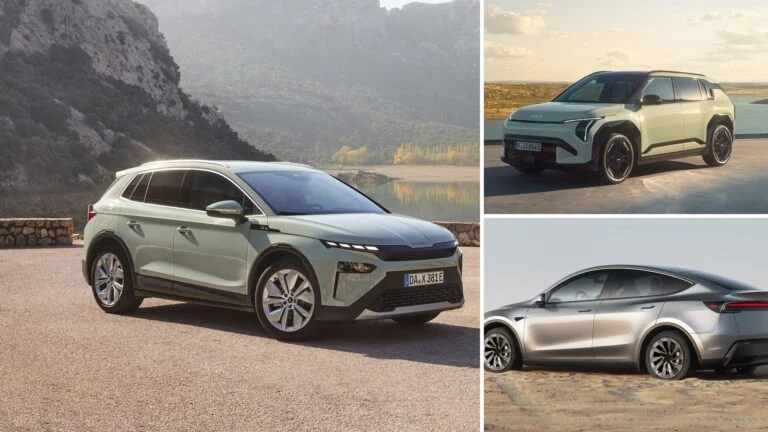
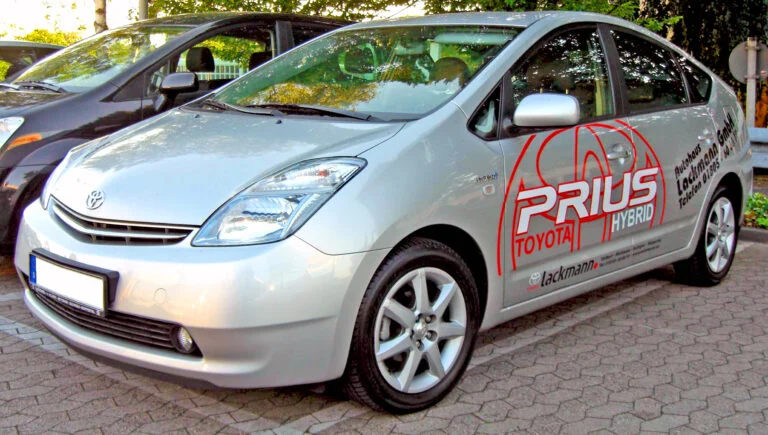
After the drive, look under the car for dripping oil and carefully touch the wheels: a noticeably hotter one points to a sticking brake. In an EV or hybrid, drive longer to compare the kilometers covered with the drop in range, and ask about the battery warranty terms. If you are still choosing a model, see our top electric cars of 2026.
Result: The car tracks straight, brakes evenly, shifts without jerks, and nothing leaks.
Have an independent garage inspect the car
Choose the garage yourself rather than on the seller’s recommendation, and book a time in advance. The MVS counts a seller’s refusal to take the car for an inspection among the signs of fraud, and ADAC lists it among the warning signs when buying.
On a lift, the mechanic will check the underbody, suspension, brakes and leaks, run computer diagnostics on all modules and measure paint thickness. For an EV, ask the brand’s dealer or a specialist shop about checking the condition of the traction battery.
The result is a list of faults with approximate repair costs. With it you can negotiate or calmly walk away.
Result: You have a list of faults with repair estimates — leverage to negotiate or a reason to walk away.
Complete the purchase at an MVS service center or in Diia
At an MVS service center the sales contract is drawn up in front of an administrator, so both the seller and the buyer must attend (or the seller’s representative with a notarized power of attorney). You need a passport or ID card, RNOKPP, the registration certificate, the license plates and the car itself. The contract itself, the MVS stresses, is free.
Before registration, the administrator checks the car and the seller against the vehicle register, the wanted database, the Interpol database, DRORM and the Unified Register of Debtors. In case of an arrest, a wanted listing, a ban on re-registration, a lien without the lienholder’s consent, a seller who is a debtor or mismatched numbers, the service is refused.
On the day of the deal you can order an expert examination: MVS experts verify the authenticity of the identification numbers and registration documents. It is optional for a car already registered in Ukraine and mandatory for the first registration of a used car brought from abroad.
According to the MVS Main Service Center, as of October 5, 2026, re-registration with a new license plate costs about UAH 1,360: UAH 350 for the service, UAH 660 for the certificate blank and UAH 350 for the plate, plus the bank fee. Blank and plate prices vary by region. Registration is done within one working day.
A buyer of a used car from a private individual pays no taxes. The seller pays 0% on the first passenger car sold in a year, 5% personal income tax plus a 5% military levy on the second, and 18% plus 5% on the third and later ones. The 3–5% pension fund levy is charged only at a car’s first registration in Ukraine.
Online, the deal can only be done in the Diia app: the seller picks “Продати транспортний засіб” (sell a vehicle) and sends the buyer a QR code or contract link, the buyer confirms the terms and pays the fees in their own app, and the system checks the car against the registers. Ukrposhta delivers the new certificate and plates; the online service can take up to 5 working days.
Pay on the day of the deal, once the administrator has accepted the documents and you are signing the contract, and in a Diia deal only after you have seen the car in person. A large sum is safer to transfer to an account, which leaves proof. The NBU cash limit between individuals (UAH 50,000) applies only to notarized contracts.
If the contract is signed at a notary’s office rather than at a service center, the car must be re-registered within 10 days. The new owner notifies the insurer under the existing MTPL policy in writing within 15 calendar days.
Result: The registration certificate is in your name — plastic or electronic in Diia.
New car from a dealer: what to check at delivery
Check a new car before you sign the acceptance certificate: issues noted in it are easier to raise with the dealer.
- The VIN on the body matches the contract, the invoice and the car’s documents; the model, color, trim and options match the contract.
- The body has been inspected in daylight: no chips or scratches from transport, even panel gaps, intact wheels and tires.
- The odometer shows low delivery mileage; noticeable mileage needs an explanation.
- Everything is there: keys, a spare wheel or repair kit, tools, floor mats — everything that was promised.
- The service book or electronic record shows the pre-delivery inspection (PDI), and the warranty terms are given in writing.
- You have the purchase documents and the document confirming that the car’s design meets road safety requirements — without them the car won’t be registered.
- An individual can pay a company no more than UAH 50,000 in cash per day; the rest goes by transfer.
- At first registration in 2026 you pay the pension fund levy: 3% of the price up to UAH 549,120, 4% up to UAH 965,120 and 5% above that. Purely electric cars are exempt.
Checklist: what to check when buying a used car
| What to check | Where and how | Red flag |
|---|---|---|
| Listing and seller | Meeting, profile, image search | Prepayment, no VIN, rush |
| Documents and VIN | Certificate, MVS online check | VIN mismatch, copies only |
| Registration history | Driver’s Cabinet, UAH 54.82 | Frequent owner changes |
| Wanted status | MVS wanted-records site | Car is listed |
| Policy and claims | MTIBU: policy, owner’s report | Hidden accidents and payouts |
| Liens and arrests | Justice Ministry DRORM, UAH 70 | Any encumbrance record |
| Seller’s debts | Unified Register of Debtors | Seller is listed |
| Body and glass | Daylight, paint gauge | Repaint, uneven gaps |
| Interior | Smell, floor mats, wear | Damp, rust under mats |
| Engine and electronics | Cold start, OBD scanner | Smoke, errors, recent reset |
| Running gear and brakes | Test drive | Knocks, pulling, vibration |
| Hidden defects | Independent garage | Seller refuses a check |
| The deal | MVS service center or Diia | Money before the admin check |
If a check turns up a problem
- The VIN doesn’t match or the plate was replaced — walk away: an MVS service center won’t register such a car.
- The MVS online tool can’t find the certificate — that is normal for documents issued before 2013; otherwise, do the deal only at an MVS service center.
- DRORM shows a lien — without the written consent of the lienholder, such as a bank, the car won’t be re-registered; wait until the seller repays the debt and the encumbrance is removed.
- The seller is in the Unified Register of Debtors — re-registration will be refused until the enforcement proceedings are closed and the record is removed from the register.
- The scanner shows codes were recently cleared — arrange a second check after a few days of normal driving.
- The seller won’t allow a garage inspection or rushes you — look for another car.
Common buyer mistakes
- Viewing a car in the evening, in the rain or dirty — paint defects and rust stay hidden.
- Trusting PDF “checks against all databases” from the seller or a middleman — the MVS Main Service Center says plainly that they guarantee nothing.
- Taking a car under a “general power of attorney” without re-registration — the seller remains the owner.
- Agreeing to “we’ll do the paperwork without you” and paying before the check at an MVS service center.
Sources and methodology
Analysis of public sourcesChecked 5 October 2026
- MVS Main Service Center — vehicle registration and re-registration: documents, cost, grounds for refusal hsc.gov.ua
- MVS Main Service Center — a full online check of a car through registers is impossible (February 25, 2026) hsc.gov.ua
- MVS Driver’s Cabinet — vehicle check by VIN e-driver.mvs.gov.ua
- Cabinet of Ministers Resolution No. 830 — DRORM procedure and extract fees zakon.rada.gov.ua
- MTIBU — MTPL policy validity check mtsbu.ua
FAQ
Can you check a car for an arrest online?
Partly: liens and arrests by enforcement officers show up in DRORM (an extract costs UAH 70), the seller’s debts in the Unified Register of Debtors, and theft in the MVS wanted database. Some restrictions are closed, so the car gets a full check only at re-registration at an MVS service center or in Diia.
How much does it cost to re-register a car in 2026?
According to the MVS Main Service Center, about UAH 1,360 with a new license plate (the service, the certificate blank and the plate) plus the bank fee. The contract at a service center is free, and a buyer of a used car from a private individual pays no taxes.
Do you need a new MTPL policy after buying a used car?
Not necessarily: the seller’s policy stays in force, and the new owner must notify the insurer in writing within 15 calendar days. But MTIBU calls a new contract the safest option — especially if the old one restricts drivers’ age or mileage.
Can you buy a car through Diia without visiting a service center?
Yes, passenger cars, motorcycles and mopeds are re-registered this way: the system itself checks the car and both parties’ documents, and Ukrposhta delivers the certificate and plates. The service can take up to 5 working days. An online deal doesn’t replace a viewing and a garage inspection.
How do you check the real mileage of a used car?
Compare the odometer with the service book, invoices and the oil-change sticker, and look at the wear on the steering wheel, pedals and driver’s seat. For cars from the US, the latest odometer readings are in the NMVTIS report. Ask the seller to confirm the claimed mileage in writing.






Leave a Reply