
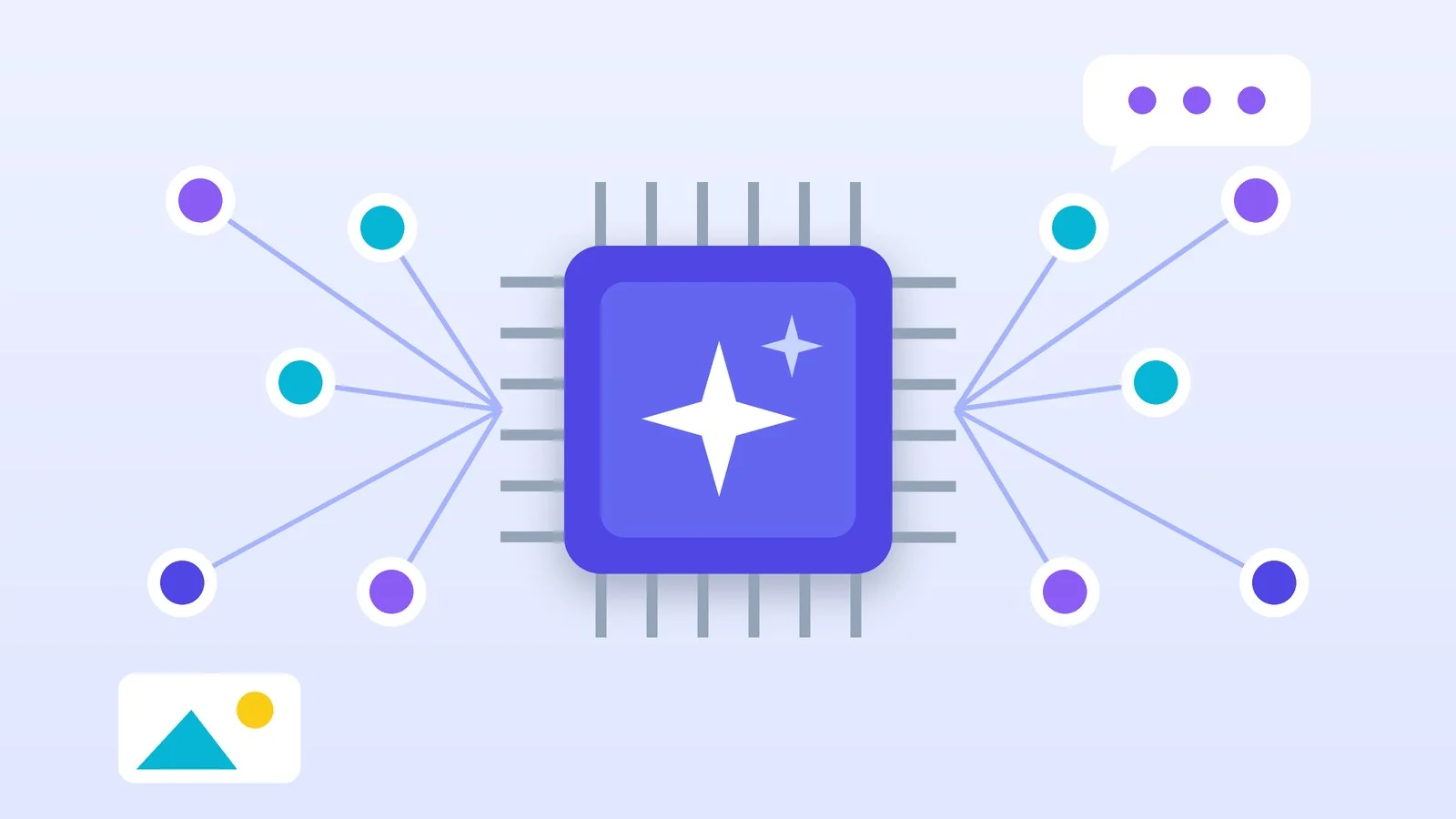
Artificial intelligence in 2026 is software that draws its own conclusions from the data it receives and produces a result: an answer, a translation, an image, a forecast, or a decision. For ordinary people, it already helps with finding information, writing and translating text, editing photos, and coding — but it still makes confident mistakes, doesn’t know recent news without search, and calls for care with personal data.
Below is what AI can do in practice, where it is used, what it can’t do, how to check its answers and spot deepfakes, and which AI rules apply in the EU and are being prepared in Ukraine. Facts were checked against official sources as of October 7, 2026.
What artificial intelligence is, in plain words
The Organisation for Economic Co-operation and Development (OECD) defines an AI system as a machine-based system that infers, from the input it receives, how to generate outputs — predictions, content, recommendations, or decisions — that can influence physical or virtual environments. Systems differ in how autonomously they act and whether they can adapt after deployment. EU law defines AI in almost the same way.
A regular program follows rules that a person writes. Most modern AI systems are trained on examples and find the patterns themselves. That is why AI copes with tasks where rules are hard to spell out — speech, photos, free-form text. It is also the main weakness: an AI answer is an inference from data, not a verified fact.
| Term | What it is | Example |
|---|---|---|
| Artificial intelligence | Systems that draw conclusions from data | Spam filter, robotaxi |
| Machine learning | Building AI by learning from examples | Video recommendations |
| Neural network | A model made of layers of simple nodes | Face and speech recognition |
| Generative AI | Models that create text, images, sound | ChatGPT, Gemini, Claude |
The terms nest inside each other: machine learning is part of AI, neural networks are one machine learning method, and generative models like ChatGPT are built on very large neural networks. Our article “Neural networks: what they are and how they work” explains in detail how a neural network learns and why it makes mistakes.
What AI can do for ordinary people in 2026
Generative AI has already become an everyday tool for many: according to Eurostat, 32.7% of EU residents aged 16–74 used it in 2025 — 25.1% for personal purposes, 15.1% for work, and 9.4% for formal education. Here is what it can do in practice.
- Explain and work with text. Chat assistants summarize long documents, explain terms in plain words, draft emails, analyze photos and files, and hold voice conversations. We compare ChatGPT, Gemini, and Claude and what their plans offer in our AI assistant comparison.
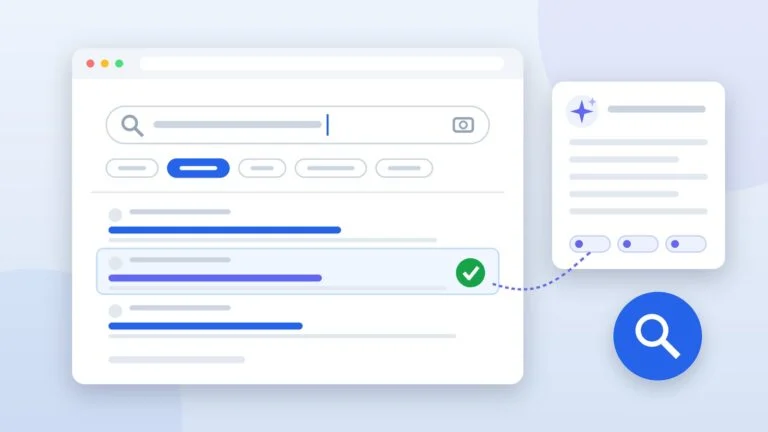
- Search. Search engines and chatbots pull a short summary with links from the pages they find. That saves time, but a summary can misstate its source, so open the links for anything important.
- Translate. Since August 2025, Google Translate has been able to translate a live conversation: it switches between the speakers’ languages on its own, reads the translation aloud, and shows a transcript on screen. Its list of more than 70 supported languages includes Ukrainian and Russian, but Google has rolled the feature out country by country.
- Edit and create photos, video, and music. AI removes unwanted objects from photos, changes backgrounds, and generates images and clips from a description. Such content may carry an invisible mark: Google, for example, has watermarked more than 20 billion pieces of content with SynthID since 2023 (as of November 2025). How to make a track from a text prompt is covered in our article on AI music generation.
- Help with code. Assistants write and explain snippets of code and look for bugs. According to the Stanford AI Index 2026, on SWE-bench Verified, a benchmark built from real GitHub tasks, model scores rose from 60% to near 100% in a single year. In a real project, though, their code still needs tests and review.
- Make technology more accessible. Android’s TalkBack screen reader uses Gemini to describe images and answer questions about them and the whole screen, helping people who are blind or have low vision. On iPhone 15 Pro, iPhone 16, and later, Personal Voice builds a synthesized voice that sounds like you from 10 recorded phrases in under a minute, for people at risk of losing their speech. It currently supports only English (U.S.), Mandarin Chinese, and Spanish (Mexico).
Where artificial intelligence is used
Beyond smartphones and chatbots, AI works in medicine, transportation, finance, science, and public services. A few examples from regulators, statistics offices, and the companies themselves:
- Medicine. The public list kept by the FDA, the U.S. regulator, includes more than 1,600 AI-enabled medical devices and programs authorized for marketing (list updated September 4, 2026). About three quarters of them are in radiology, meaning they help analyze medical images.
- Transportation. Waymo robotaxis carry passengers with no driver in 15 U.S. metro areas, from Phoenix and Los Angeles to Miami. The company reports more than 20 million rides, and London and Tokyo are among the next cities on its list.
- Finance. Banks and payment networks use AI to spot suspicious transactions and assess customers’ creditworthiness. In the EU, AI for credit scoring counts as a high-risk system with strict requirements, while systems for detecting fraud are excluded from that list.
- Science. For AlphaFold2, which predicted the structure of virtually all 200 million known proteins, Demis Hassabis and John Jumper of Google DeepMind received half of the 2024 Nobel Prize in Chemistry. By then, more than 2 million people from 190 countries had used AlphaFold2.
- Public services. Since September 2025, Ukraine’s Diia.AI agent has delivered government services right in a chat. On the Diia portal it started with an income certificate; since May 2026 it has also been in the app, issuing residence certificates for adults and children and helping pay traffic fines. It runs on Gemini in open beta, and Ukraine’s Ministry of Digital Transformation says personal data is processed only inside the service’s protected perimeter.
- Business. According to Eurostat, 20% of EU enterprises with 10 or more employees used AI in 2025, up from 13.5% a year earlier. The most common uses were analyzing written language and generating images, video, and audio.
- Cameras. Pixel 10 phones add Content Credentials — signed information on how a shot was made — to every JPEG photo taken with the built-in camera app. That makes it easier to tell an authentic photo from an altered one (more in the deepfakes section).
What AI can’t do: the main limitations
The more convincing an AI answer sounds, the easier it is to forget that it is only a likely inference from data. The problems are not theoretical: according to the Stanford AI Index 2026, documented AI incidents rose to 362, up from 233 in 2024. Here are five limitations worth remembering.
It makes confident mistakes
The U.S. National Institute of Standards and Technology (NIST) calls this confabulation, known colloquially as hallucinations: a model confidently states false information, sometimes with made-up quotes or citations “as proof.” The cause lies in how generative models are designed: they produce a statistically likely answer rather than checking it against facts. According to NIST, a model can lay out logical-looking reasoning steps even for a wrong answer.
Its abilities are uneven
A model can solve extremely hard problems and fail simple ones. The Stanford AI Index 2026 gives an example: Gemini Deep Think earned a gold medal at the International Mathematical Olympiad, yet the top model tells the time on an analog clock correctly only 50.1% of the time. Success at one task guarantees nothing about the next one.
Its knowledge has a date
A model knows the world up to the point when data collection for its training ended. Developers state this date in their documentation. Anthropic, for example, lists a Reliable knowledge cutoff: the date through which a model’s knowledge is most extensive and reliable. A model learns about later events only from search or your files, so check prices, laws, software versions, and news against the source’s publication date.
Data and language biases
AI repeats the biases of the data it learned from. NIST specifically flags performance gaps between groups of people and between languages, which can lead to discrimination and false conclusions. For users in Ukraine, this shows in feature availability too: Apple Intelligence in iOS 27 supports English, German, French, Japanese, and about a dozen other languages, but neither Ukrainian nor Russian.
Privacy
AI services store your conversations on their servers. Even temporary chats in ChatGPT and Claude can stay on servers for up to 30 days, and Gemini keeps chats for 72 hours with Keep Activity turned off. People may read some conversations: Google asks users not to enter confidential information into Gemini that they wouldn’t want a reviewer to see, and keeps reviewed chats for up to three years.
In ChatGPT, Gemini, and Claude, you can stop your conversations from being used to train models — where to find these settings is explained in the assistant comparison mentioned above. Protect the account itself too: ChatGPT, for example, now has a security history with sign-ins and account protection changes.
How to check AI answers
Each task has its own typical AI mistakes. The table shows where a model is strong, where it most often goes wrong, and how to check quickly.
| Task | What AI does well | Where it goes wrong | How to check |
|---|---|---|---|
| Facts, explanations | Explains things quickly and plainly | Invents facts, quotes, links | Open the original source |
| News, prices, laws | Builds a fresh summary with search | Mixes up dates, old and new | Date and official website |
| Translation | Everyday speech, messages, menus | Terms, names, legal texts | Back-translation, a professional |
| Emails and texts | Drafts, shortens, changes the tone | Generic wording, wrong details | Proofread, check the numbers |
| Photos and video | Removes clutter, creates shots | Hands, teeth, eyes, shadows | AI labels and the file’s source |
| Code | Writes and explains snippets | Plausible code with bugs | Tests and code review |
| Health, money, law | Explains terms, prepares questions | Dangerous or outdated advice | Doctor, lawyer, the law itself |
A short checklist before you use an AI answer:
- Ask what the answer is based on and open the links: the source must exist and say the same thing.
- Check the dates. For news, prices, laws, and software versions, turn on search and check the publication date.
- Verify numbers, names, dates, and quotes against the original source — the manufacturer’s or agency’s website, the text of the law.
- Rephrase the question or ask another model. If the answers differ, check especially carefully.
- On health, money, and legal questions, use the answer to prepare questions for a professional, not instead of one.
- Don’t enter passwords, card details, or medical and work documents; use a temporary chat for one-off questions.
- Don’t mistake a confident tone and neat logic for proof of accuracy.
Deepfakes: how to spot a fake
The EU AI Act defines a deepfake as AI-generated or manipulated image, audio, or video content that resembles real people, objects, places, or events and that a person could mistake for authentic. Scammers use deepfakes to pose as relatives, company executives, or authority figures: they fake a voice on a call, a face on a video call, or documents in a photo.
In December 2024, the FBI gave this advice:
- Agree on a secret word or phrase with your family to verify that it is really them calling.
- Look closely at details: distorted hands or feet, unrealistic teeth or eyes, blurry faces, odd glasses or jewelry, wrong shadows, lag, and a voice that doesn’t match the movements.
- Listen closely to tone and word choice: they help you tell a loved one’s real call from a cloned voice.
- If you get a call “from the bank” or from a “relative” asking for money, hang up and call back yourself at a number you know or found on the official website.
- If possible, limit public photos and recordings of your voice, and make your social media profiles private.
- Don’t send money, gift cards, or cryptocurrency to people you know only online or by phone.
Technical checks help too. In Gemini, upload a photo, a video under 90 seconds, or audio up to an hour and ask whether Google AI made it: Gemini looks for a SynthID watermark and, on the web and in the Android app, also checks Content Credentials. These are a signed “label” with the file’s history, based on the open C2PA standard backed by Adobe, Google, Microsoft, OpenAI, Meta, and others.
Text is the hardest: after editing, shortening, or translation, the technical signal can disappear. More in our news story on OpenAI’s approach to labeling text in the EU.
The EU AI Act and the rules in Ukraine
The EU’s Artificial Intelligence Act (AI Act) is Regulation (EU) 2024/1689. It sorts systems by risk: unacceptable practices are banned, high-risk systems face strict requirements, and chatbots and content generators must follow transparency rules. Most systems, such as spam filters and video games, are minimal risk. The AI Omnibus amendments, in force since July 27, 2026, pushed back the high-risk deadlines and added a new ban.
August 1, 2024
The law enters into force
Regulation (EU) 2024/1689
February 2, 2025
First bans
Social scoring, manipulation, emotion recognition at work and in education, scraping facial images from the internet for recognition databases
August 2, 2025
General-purpose models
Developers keep documentation, follow EU copyright law, and publish a summary of training data
August 2, 2026
Most rules and enforcement
Transparency: people must know they are dealing with AI, and deepfakes must be labeled
December 2, 2026
New bans and marking
Ban on AI for non-consensual intimate images and child sexual abuse material; machine-readable marks for generators released before August 2, 2026
December 2, 2027
High risk
Biometrics, education, hiring, credit scoring, and other Annex III areas
August 2, 2028
AI in regulated products
For example, in toys and elevators
For EU users, the key part is transparency. Since August 2, 2026, a service must tell you that you are dealing with AI unless that is obvious. Anyone who publishes a deepfake, or AI-generated text on a matter of public interest, must disclose it; text is exempt if an editor who holds editorial responsibility reviewed it. The European Commission offers voluntary icons for this: “Fully AI-Generated” and “Partially AI-Modified.”
Fines for prohibited practices can reach €35 million or 7% of a company’s worldwide annual turnover, whichever is higher. The law places no obligations on users themselves: it does not cover purely personal, non-professional use of AI. It does, however, apply to companies from any country, including Ukraine, if their AI is sold in the EU or its output is used there.
Ukraine is still drafting a dedicated AI law. The Ministry of Digital Transformation chose a bottom-up approach: self-regulation and guidance for businesses first, then a law modeled on the EU’s. In June 2026, a working group began drafting it in line with EU rules. Ukraine also signed the Council of Europe Framework Convention on Artificial Intelligence in May 2025; it becomes binding after ratification by the Verkhovna Rada.
Sources and methodology
Analysis of public sourcesChecked 7 October 2026
- OECD — AI Principles and the definition of an AI system oecd.ai
- European Commission, AI Act Service Desk — AI Act implementation timeline ai-act-service-desk.ec.europa.eu
- NIST AI 600-1 — Generative AI Profile nvlpubs.nist.gov
- FBI (IC3) — public service announcement on generative AI fraud ic3.gov
- Stanford HAI — AI Index Report 2026 hai.stanford.edu
FAQ
How is artificial intelligence different from a neural network?
AI is the umbrella term for systems that draw conclusions from data. A neural network is one way to build such a system: chatbots, translators, and face recognition, for example, run on neural networks. Every neural network is AI, but not every AI is a neural network.
Can you trust answers from ChatGPT and other chatbots?
As a draft, yes; as a reference, only after checking. Models make confident mistakes and can even invent a source, so verify numbers, dates, quotes, and advice on health, money, and law against the original source.
How can you tell if a photo or video was made by AI?
There is no foolproof method. Look for artifacts — distorted hands, eyes, shadows, a voice that doesn’t match the movements — check the file in Gemini, and find out who published it first. A missing AI label does not prove authenticity.
Does the EU AI Act apply in Ukraine?
Not directly, but Ukrainian companies must comply if their AI is sold in the EU or its output is used there. Ukraine has been drafting its own dedicated AI law, aligned with EU rules, since June 2026.
Is it safe to upload documents and photos to AI?
It depends on the service and your settings: conversations are stored on servers, reviewers may read some of them, and unless you turn off training in the settings, your chats may be used to improve models. Don’t upload passports or medical and work documents; use a temporary chat for one-off tasks.






Leave a Reply