
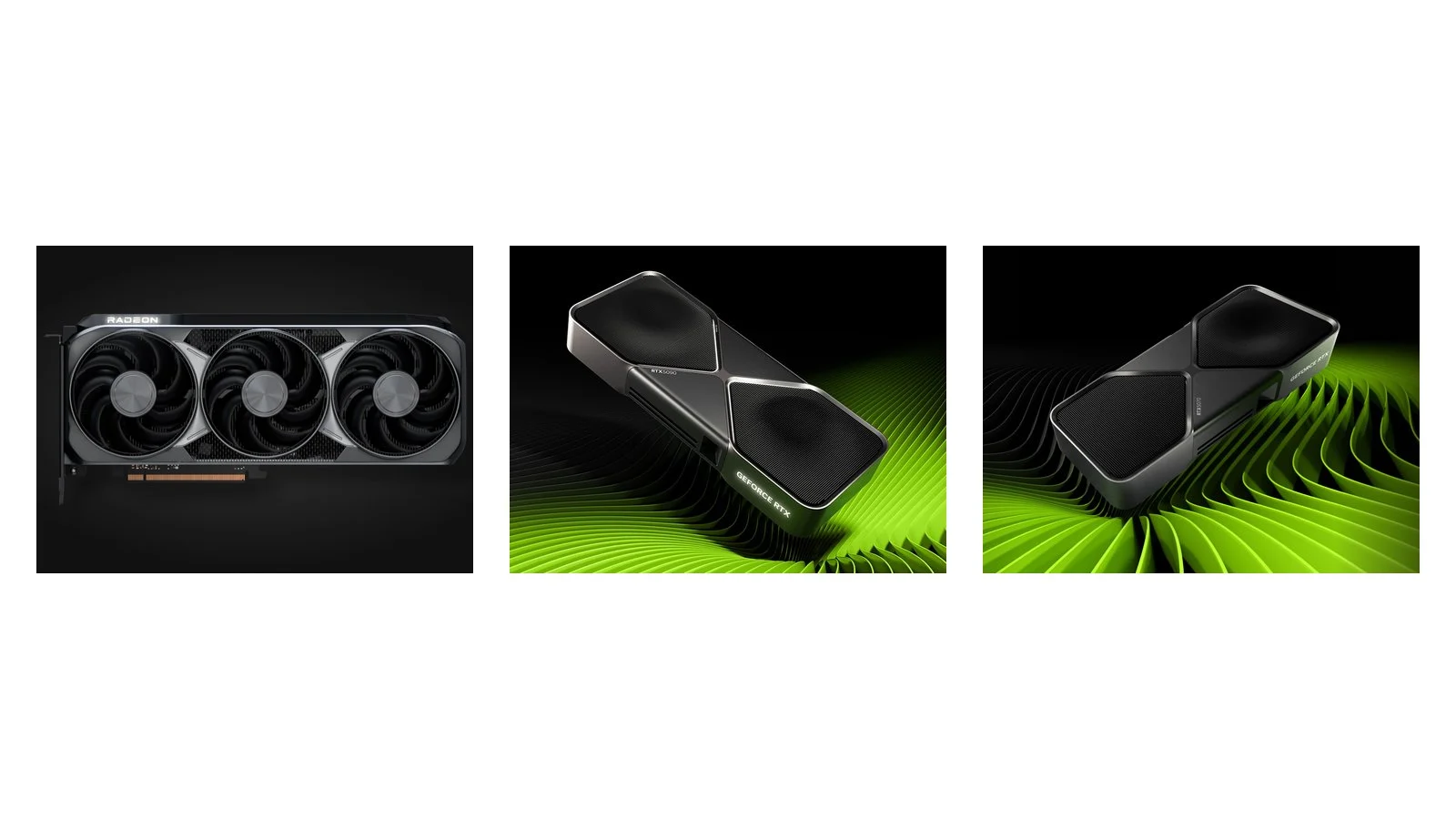
The best graphics cards of 2026 are NVIDIA’s GeForce RTX 50, AMD’s Radeon RX 9000 and the Intel Arc B580. The most powerful is the GeForce RTX 5090 with 32 GB of memory; for 4K there’s the RTX 5080, for 1440p the RTX 5070 Ti or the cheaper Radeon RX 9070 XT, for 1080p the Radeon RX 9060 XT 16 GB and GeForce RTX 5060 Ti 16 GB, and the cheapest is the $249 Intel Arc B580.
This ranking covers 10 graphics cards on sale in September 2026, from budget 1080p cards to the most powerful 4K flagships. Each entry lists specs from the maker’s website, power draw and the recommended power supply, average FPS from Tom’s Hardware testing and the MSRP. After the list you’ll find a comparison table and chart, plus tips on choosing a graphics card for your monitor, power supply and case.
How we picked
- Current models only. All 10 cards are listed on the NVIDIA, AMD and Intel websites in September 2026. NVIDIA hasn’t released a new desktop gaming graphics card since summer 2025 and hasn’t announced an RTX 50 Super series, while Intel’s current Arc B gaming lineup for desktops has just two models, the B580 and B570. The models from the previous version of this article (Radeon RX 5500 XT, RX 5600 XT and GeForce RTX 3060 Ti) came out in 2019–2020 and have long been replaced by newer generations.
- Every budget and resolution. From 1080p cards (1920 × 1080) to 4K flagships (3840 × 2160), at MSRPs from $249 to $1,999.
- Manufacturer data. Specs, power draw and the minimum power supply come from nvidia.com, amd.com and intel.com.
- Independent testing. Performance comes from the Tom’s Hardware GPU hierarchy, updated June 25, 2026: average FPS across 11 games without ray tracing and 8 games with it, at native resolution, without DLSS, FSR or frame generation, on a PC with a Ryzen 7 9800X3D.
- MSRPs in US dollars. For NVIDIA, the “starting at” prices on the company’s US website as of September 29, 2026; for Intel, the recommended price on intel.com; for AMD, the price announced at launch. The makers don’t publish prices in Ukrainian hryvnias: NVIDIA’s European site, which lists Ukraine among its countries, shows no prices.
We didn’t test these cards ourselves: this roundup relies on manufacturer data and Tom’s Hardware testing. Keep in mind that memory got more expensive in 2026: in its August 26, 2026 report, NVIDIA says consumer PC sales were held back by elevated memory and system prices. Graphics cards often sell above MSRP, so use it as a baseline to judge how much extra you’re paying.
1. NVIDIA GeForce RTX 5090
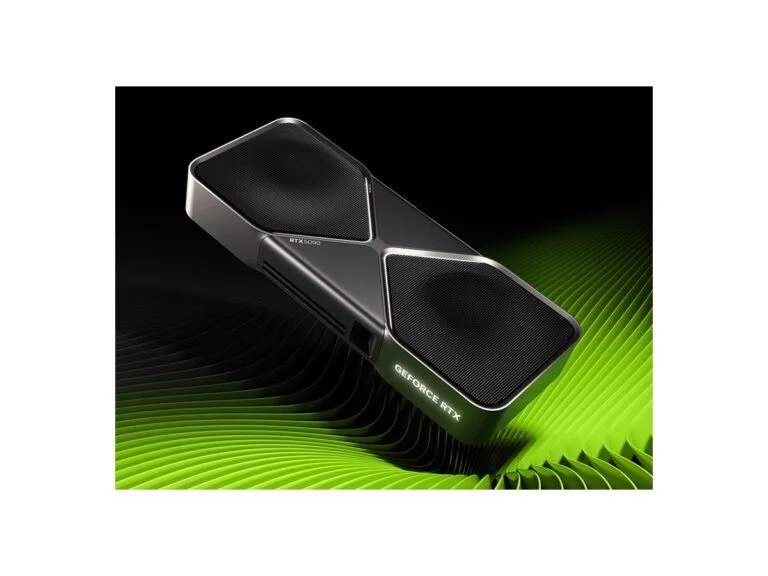
Most powerfulNVIDIA graphics card
NVIDIA GeForce RTX 5090
- Architecture
- NVIDIA Blackwell
- CUDA cores
- 21,760
- Video memory
- 32 GB GDDR7, 512-bit, 1,792 GB/s
- Power
- 575 W
- Power supply
- 1,000 W minimum
- Power connector
- 600 W PCIe Gen 5 cable or 4 × 8-pin via adapter
- Founders Edition
- 304 × 137 mm, 2 slots
- Technologies
- DLSS 5, Multi Frame Generation up to 6X
Pricefrom $1,999 (NVIDIA's US MSRP)checked 29 September 2026
For high-refresh 4K monitors, path tracing, AI models and 3D work, if your budget and power supply allow it.
- Top gaming performance
- 32 GB of GDDR7 for 4K, AI and 3D
- Founders Edition takes just 2 slots
- 575 W and a 1,000 W power supply
- Sells well above $1,999 in stores
The RTX 5090 is the fastest card in this roundup, and NVIDIA calls it the most powerful GeForce ever made. It has 21,760 CUDA cores and 32 GB of GDDR7 on a 512-bit bus with 1,792 GB/s of bandwidth. In Tom’s Hardware testing at 4K, it averages 111 FPS without ray tracing and 64 FPS with it, 43% and 52% more than the RTX 5080.
That speed costs power: 575 W and a 1,000 W power supply. The card uses a 16-pin connector, fed by a 600 W PCIe Gen 5 cable or by the included adapter for four 8-pin cables. The 304 mm Founders Edition takes two slots; check partner cards’ dimensions on the board maker’s website.
The US MSRP starts at $1,999, but in 2026 the RTX 5090 sells for much more in stores. It makes sense for a high-refresh 4K monitor, path tracing, and AI or 3D work: its 32 GB of memory is double what any other card in this ranking has.
2. NVIDIA GeForce RTX 5080
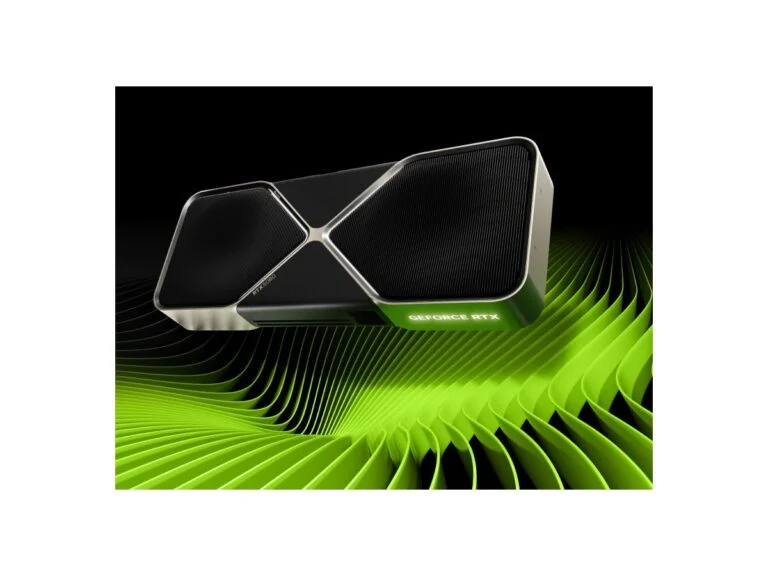
For 4KNVIDIA graphics card
NVIDIA GeForce RTX 5080
- Architecture
- NVIDIA Blackwell
- CUDA cores
- 10,752
- Video memory
- 16 GB GDDR7, 256-bit, 960 GB/s
- Power
- 360 W
- Power supply
- 850 W minimum
- Founders Edition
- 304 × 137 mm, 2 slots
- Technologies
- DLSS 5, Multi Frame Generation up to 6X
Pricefrom $999 (NVIDIA's US MSRP)checked 29 September 2026
For 4K gaming at high settings when the RTX 5090 is too expensive or too power-hungry.
- Second-fastest card in the ranking
- Half the RTX 5090's MSRP
- Founders Edition takes 2 slots
- 16 GB, half of the RTX 5090's
- 850 W power supply required
The RTX 5080 is the second-fastest card in the ranking and the main pick for 4K. It has 10,752 CUDA cores and 16 GB of GDDR7 with 960 GB/s of bandwidth. In Tom’s Hardware testing at 4K, it averages 77 FPS without ray tracing and 42 FPS with it, and 128 and 74 FPS at 1440p.
It draws 360 W, and NVIDIA requires an 850 W power supply. The Founders Edition is as compact as the RTX 5090’s: 304 mm and two slots. The MSRP starts at $999, half that of the RTX 5090. In demanding path-traced games at 4K you’ll want DLSS: on the RTX 50 series it generates up to five frames for every rendered one.
The RTX 5080 suits graphically demanding story games at 4K, such as those in our roundup of the best single-player games. Its main compromise is 16 GB of memory: that’s enough for games, but for large AI models the 32 GB RTX 5090 is a better fit.
3. NVIDIA GeForce RTX 5070 Ti
For 1440p and 4KNVIDIA graphics card
NVIDIA GeForce RTX 5070 Ti
- Architecture
- NVIDIA Blackwell
- CUDA cores
- 8,960
- Video memory
- 16 GB GDDR7, 256-bit, 896 GB/s
- Power
- 300 W
- Power supply
- 750 W minimum
- Dimensions
- vary by board maker
- Technologies
- DLSS 5, Multi Frame Generation up to 6X
Pricefrom $749 (NVIDIA's US MSRP)checked 29 September 2026
For 144–240 Hz 1440p and 4K with DLSS: close to the RTX 5080 at 1440p for less money.
- 16 GB of GDDR7, like the RTX 5080
- Faster than the RX 9070 XT with ray tracing
- $250 cheaper than the RTX 5080
- No Founders Edition
- 750 W power supply required
The RTX 5070 Ti gets the same memory as the RTX 5080 (16 GB of GDDR7 on a 256-bit bus) but fewer CUDA cores: 8,960 versus 10,752. At 1440p it nearly catches the step-up model: in Tom’s Hardware testing, 117 FPS versus 128 without ray tracing and 66 versus 74 with it. At 4K the gap is wider: 69 and 77 FPS without ray tracing.
It draws 300 W and needs a 750 W power supply. There’s no Founders Edition of the RTX 5070 Ti, so dimensions depend on the board maker. The MSRP starts at $749, $250 less than the RTX 5080. For a 144–240 Hz 1440p monitor or 4K with DLSS, it’s NVIDIA’s most balanced option.
4. AMD Radeon RX 9070 XT
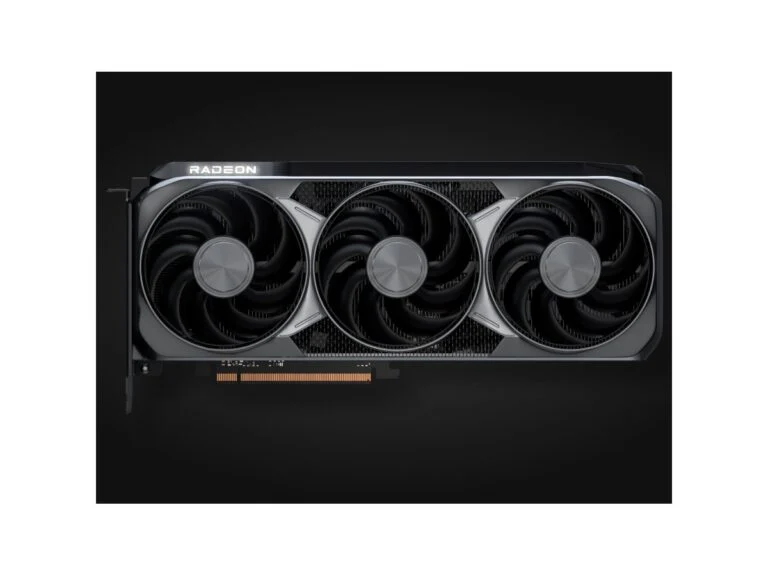
Great value for 1440pAMD graphics card
AMD Radeon RX 9070 XT
- Architecture
- AMD RDNA 4
- Compute units
- 64 (4,096 stream processors)
- Boost clock
- up to 2,970 MHz
- Video memory
- 16 GB GDDR6, 256-bit, 640 GB/s, 64 MB Infinity Cache
- Power
- 304 W
- Power supply
- 750 W minimum
- Power connectors
- 2 × 8-pin
- Technologies
- FSR “Redstone”
Price$599 (AMD's suggested price at launch, March 2025)checked 29 September 2026
For 1440p and 4K for less money: matches the RTX 5070 Ti without ray tracing.
- Matches the RTX 5070 Ti without ray tracing
- $150 cheaper than the RTX 5070 Ti at launch
- Standard 8-pin power connectors
- Slower than the RTX 5070 Ti with ray tracing
- 304 W, more than the RTX 5070 Ti
- FSR is in fewer games than DLSS
The Radeon RX 9070 XT is the top model in the RX 9000 series: 64 RDNA 4 compute units, 16 GB of GDDR6 on a 256-bit bus and 64 MB of Infinity Cache. Without ray tracing it keeps pace with the RTX 5070 Ti: in Tom’s Hardware testing at 1440p, both average 117 FPS. With ray tracing the RX 9070 XT is slower, at 56 FPS versus 66.
It draws more power than the RTX 5070 Ti, 304 W, and AMD recommends a 750 W power supply. On the plus side, AMD’s spec calls for two standard 8-pin connectors, and the launch price in March 2025 was $599, $150 less than the RTX 5070 Ti.
AI upscaling and frame generation come from AMD’s FSR “Redstone” suite, which includes what used to be FSR 4. According to AMD, FSR technologies are supported in more than 300 games, while NVIDIA counts more than 1,000 games and apps with RTX technologies, including DLSS. If you mostly play without ray tracing, the RX 9070 XT is the best value for 1440p and 4K at MSRP.
5. AMD Radeon RX 9070
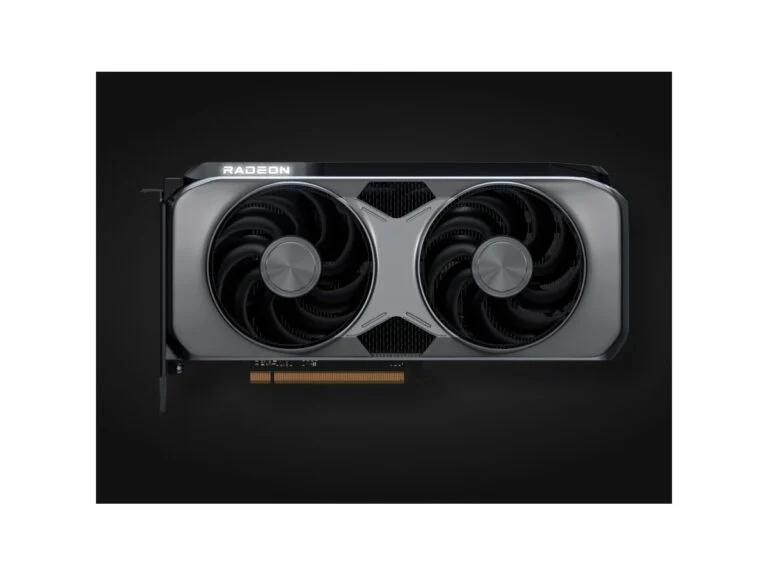
Efficient 1440p pickAMD graphics card
AMD Radeon RX 9070
- Architecture
- AMD RDNA 4
- Compute units
- 56 (3,584 stream processors)
- Boost clock
- up to 2,520 MHz
- Video memory
- 16 GB GDDR6, 256-bit, 640 GB/s, 64 MB Infinity Cache
- Power
- 220 W
- Power supply
- 650 W minimum
- Power connectors
- 2 × 8-pin
- Technologies
- FSR “Redstone”
Price$549 (AMD's suggested price at launch, March 2025)checked 29 September 2026
For 1440p in a quiet PC that doesn't run hot: 16 GB of memory at 220 W.
- 16 GB at 220 W
- Faster than the RTX 5070 without ray tracing
- 650 W power supply is enough
- A bit slower than the RTX 5070 with ray tracing
- Slower than the RX 9070 XT: 56 CUs vs. 64
The RX 9070 uses the same chip as the RX 9070 XT and keeps 16 GB of memory on a 256-bit bus, but it has 56 compute units instead of 64 and lower clocks. That drops power from 304 W to 220 W and the recommended power supply from 750 W to 650 W.
In Tom’s Hardware testing at 1440p, the RX 9070 beats the RTX 5070 without ray tracing, 104 FPS to 96, and trails it slightly with ray tracing, 48 to 52. At launch AMD asked $549 for it, the same as NVIDIA asks for the 12 GB RTX 5070.
Since June 2, 2026, the RX 9070 GRE has been sold worldwide: 48 compute units, 12 GB of GDDR6 and the same 220 W. Its launch price is also $549, but in Tom’s Hardware testing it’s slower than the RX 9070: 87 FPS versus 104 at 1440p. That’s why the RX 9070, not the newcomer, made the list.
6. NVIDIA GeForce RTX 5070
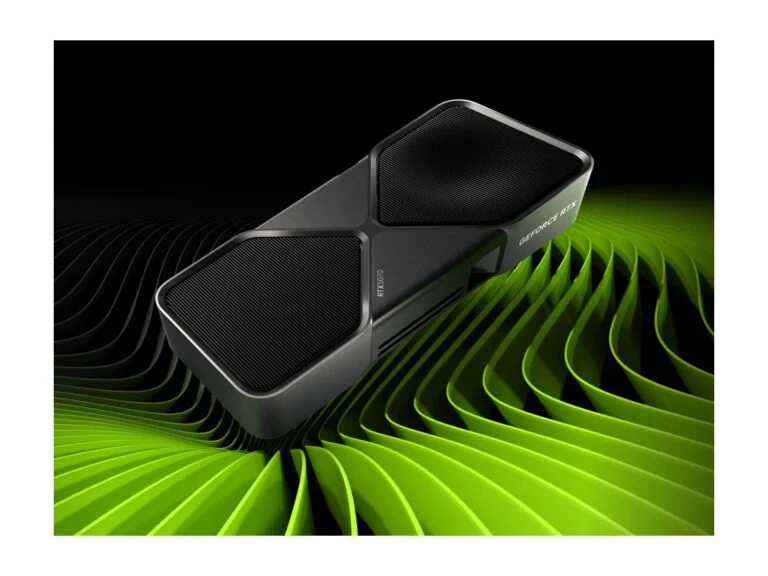
Compact 1440p pickNVIDIA graphics card
NVIDIA GeForce RTX 5070
- Architecture
- NVIDIA Blackwell
- CUDA cores
- 6,144
- Video memory
- 12 GB GDDR7, 192-bit, 672 GB/s
- Power
- 250 W
- Power supply
- 650 W minimum
- Founders Edition
- 242 × 112 mm, 2 slots
- Technologies
- DLSS 5, Multi Frame Generation up to 6X
Pricefrom $549 (NVIDIA's US MSRP)checked 29 September 2026
For 1440p with DLSS, including in a compact case.
- 242 mm Founders Edition
- DLSS 5 and Multi Frame Generation
- 650 W power supply is enough
- 12 GB, less than the RX 9070
- Slower than the RX 9070 without ray tracing
The RTX 5070 is NVIDIA’s 1440p card: 6,144 CUDA cores and 12 GB of GDDR7 on a 192-bit bus, with an MSRP starting at $549. In Tom’s Hardware testing at 1440p, it averages 96 FPS without ray tracing and 52 FPS with it.
Its strengths are every RTX 50 DLSS feature, including Multi Frame Generation and DLSS 5, and a compact Founders Edition: 242 mm, two slots, 250 W, 650 W power supply. That version meets NVIDIA’s SFF-Ready guidelines for small cases. The weak spot is memory: per Tom’s Hardware, 12 GB is usually enough without ray tracing up to 4K, but ray tracing can hit limits even at 1440p.
7. NVIDIA GeForce RTX 5060 Ti 16 GB
For 1080p and 1440pNVIDIA graphics card
NVIDIA GeForce RTX 5060 Ti 16 GB
- Architecture
- NVIDIA Blackwell
- CUDA cores
- 4,608
- Video memory
- 16 GB GDDR7, 128-bit, 448 GB/s
- Power
- 180 W
- Power supply
- 600 W minimum
- Interface
- PCIe 5.0 x8
- Technologies
- DLSS 5, Multi Frame Generation up to 6X
Price$429 (NVIDIA's MSRP at launch, April 2025); 8 GB version from $379checked 29 September 2026
For maxed-out 1080p and 1440p with DLSS, but only in the 16 GB version.
- 16 GB of memory
- 180 W, usually a single 8-pin
- DLSS 5 and Multi Frame Generation
- Just a 128-bit memory bus
- Easy to confuse with the 8 GB version
The RTX 5060 Ti comes in two versions, with 8 GB or 16 GB of GDDR7, and only the 16 GB model is worth buying. In Tom’s Hardware testing at 1440p with ray tracing, the 16 GB version averages 39 FPS and the 8 GB version 27; at 4K without ray tracing, it’s 40 versus 28 FPS. Otherwise they’re identical: 4,608 CUDA cores, a 128-bit bus and 180 W.
This card handles 1080p at max settings and 1440p with DLSS: at 1440p without ray tracing, it averages 73 FPS. NVIDIA requires a 600 W power supply, and most RTX 5060 family cards need just one 8-pin cable. The 16 GB version launched in April 2025 at $429; the 8 GB version now starts at $379.
8. AMD Radeon RX 9060 XT 16 GB
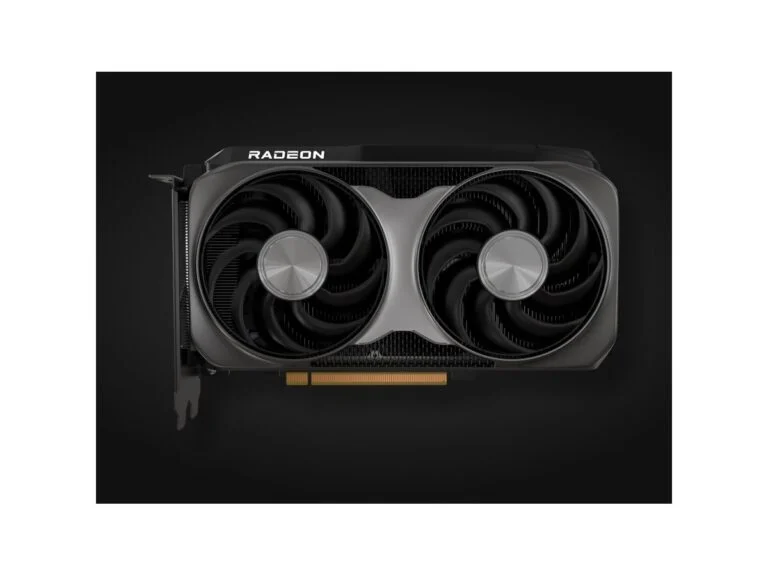
Affordable 16 GBAMD graphics card
AMD Radeon RX 9060 XT 16 GB
- Architecture
- AMD RDNA 4
- Compute units
- 32 (2,048 stream processors)
- Boost clock
- up to 3,130 MHz
- Video memory
- 16 GB GDDR6, 128-bit, 320 GB/s, 32 MB Infinity Cache
- Power
- 160 W
- Power supply
- 450 W minimum
- Interface
- PCIe 5.0 x16
- Technologies
- FSR “Redstone”
Price$349 (AMD's suggested price at announcement, May 2025)checked 29 September 2026
For maxed-out 1080p and for 1440p: 16 GB of memory at the lowest MSRP.
- Cheapest 16 GB card in this roundup
- 160 W and a 450 W power supply
- Full 16 lanes of PCIe 5.0
- Slower than the RTX 5060 Ti 16 GB with ray tracing
- A weaker 8 GB version exists
The RX 9060 XT 16 GB is the most affordable 16 GB card in this roundup: when AMD announced it in May 2025, it set a suggested price of $349. It has 32 compute units, 16 GB of GDDR6 on a 128-bit bus and 32 MB of Infinity Cache, and it draws only 160 W with a 450 W minimum power supply.
In Tom’s Hardware testing, the RX 9060 XT 16 GB averages 98 FPS at 1080p and 67 FPS at 1440p without ray tracing. With ray tracing it trails the RTX 5060 Ti 16 GB, 31 FPS versus 39 at 1440p. On the other hand, it uses all 16 PCIe 5.0 lanes, twice the RTX 5060 Ti’s bus bandwidth on the same PCIe version, which matters on older boards when memory runs out.
Like NVIDIA’s card, it also comes in an 8 GB version, priced at $299 at announcement. It falls behind already at 1440p: with ray tracing it averages 20 FPS versus 31 for the 16 GB version.
9. NVIDIA GeForce RTX 5060
For 1080pNVIDIA graphics card
NVIDIA GeForce RTX 5060
- Architecture
- NVIDIA Blackwell
- CUDA cores
- 3,840
- Video memory
- 8 GB GDDR7, 128-bit, 448 GB/s
- Power
- 145 W
- Power supply
- 550 W minimum
- Interface
- PCIe 5.0 x8
- Technologies
- DLSS 5, Multi Frame Generation up to 6X
Pricefrom $299 (NVIDIA's US MSRP)checked 29 September 2026
For 1080p, online and less demanding games when you want DLSS on a budget.
- DLSS 5 and Multi Frame Generation
- 145 W and a 550 W power supply
- Only 8 GB of memory
- Eight PCIe lanes: worse on older boards
The RTX 5060 is NVIDIA’s 1080p card, with an MSRP starting at $299. It has 3,840 CUDA cores, 8 GB of GDDR7 and a 145 W power draw, and it needs a 550 W power supply. In Tom’s Hardware testing at 1080p, it averages 89 FPS without ray tracing and 41 FPS with it.
That’s enough for online shooters and popular free PC games, and in demanding new releases DLSS upscaling and frame generation help out. The main drawback is its 8 GB of memory: Tom’s Hardware notes that Multi Frame Generation doesn’t always work with that little VRAM. And when memory runs out, performance drops harder on older PCIe 3.0 boards because the card uses eight lanes.
10. Intel Arc B580
Most affordableIntel graphics card
Intel Arc B580
- Architecture
- Intel Xe2
- Xe cores
- 20
- Graphics clock
- 2,670 MHz
- Video memory
- 12 GB GDDR6, 192-bit, 456 GB/s
- Power
- 190 W
- Power supply
- 600 W minimum
- Interface
- PCIe 4.0 x8
- Reference card
- 272 × 115 mm, 2 slots
- Technologies
- XeSS 2, XeSS 3
Price$249 (Intel's recommended price)checked 29 September 2026
For a budget 1080p PC, as long as the motherboard supports Resizable BAR.
- 12 GB of memory for $249
- Faster than the RTX 5050 in testing
- XeSS 3 with Multi-Frame Generation
- Slower without Resizable BAR
- Worse game compatibility than NVIDIA and AMD
The Arc B580 is the most affordable card in the ranking: Intel’s recommended price is $249. Yet it has 12 GB of GDDR6 on a 192-bit bus, more than the RTX 5060. In Tom’s Hardware testing at 1080p, the Arc B580 averages 72 FPS without ray tracing and 35 FPS with it, ahead of the GeForce RTX 5050 at the same MSRP.
It comes with more caveats than its rivals. Intel requires Resizable BAR to be enabled in the BIOS; without it, the card runs slower. The Arc B580 connects over eight PCIe 4.0 lanes, draws 190 W and needs at least a 600 W power supply. For upscaling there’s XeSS 2 with frame generation, and XeSS 3 adds up to three generated frames between two rendered ones.
Intel’s weak spot is game compatibility: in 2026, Tom’s Hardware stopped recommending Arc cards after Fortnite’s Nanite and Lumen graphics settings were unavailable on them for several months. If you’d rather not take the risk, get the GeForce RTX 5050 for the same $249: it has 8 GB of GDDR6 and a 130 W power draw, and it’s slower, but it supports DLSS.
Best graphics cards 2026: comparison
| Model | Resolution | Video memory | Card power, W | Minimum PSU, W | MSRP |
|---|---|---|---|---|---|
| GeForce RTX 5090 | 4K | 32 GB GDDR7 | 575 | 1,000 | from $1,999 |
| GeForce RTX 5080 | 4K | 16 GB GDDR7 | 360 | 850 | from $999 |
| GeForce RTX 5070 Ti | 1440p, 4K | 16 GB GDDR7 | 300 | 750 | from $749 |
| Radeon RX 9070 XT | 1440p, 4K | 16 GB GDDR6 | 304 | 750 | $599 |
| Radeon RX 9070 | 1440p | 16 GB GDDR6 | 220 | 650 | $549 |
| GeForce RTX 5070 | 1440p | 12 GB GDDR7 | 250 | 650 | from $549 |
| GeForce RTX 5060 Ti 16 GB | 1080p, 1440p | 16 GB GDDR7 | 180 | 600 | $429 |
| Radeon RX 9060 XT 16 GB | 1080p, 1440p | 16 GB GDDR6 | 160 | 450 | $349 |
| GeForce RTX 5060 | 1080p | 8 GB GDDR7 | 145 | 550 | from $299 |
| Intel Arc B580 | 1080p | 12 GB GDDR6 | 190 | 600 | $249 |
How to choose a graphics card
Resolution and refresh rate
The key factors are your monitor’s resolution and refresh rate. For 1080p, the RX 9060 XT 16 GB, RTX 5060 or Arc B580 will do; for 1440p, the RTX 5070, RX 9070 or RX 9070 XT; for 4K, the RTX 5070 Ti with DLSS, RTX 5080 or RTX 5090. For a 144–240 Hz monitor, go one tier up: high refresh only pays off when FPS gets close to it.
Video memory
- 8 GB is the minimum for 1080p. New games with maxed-out textures can run short of it.
- 12 GB is for 1440p. According to Tom’s Hardware, ray tracing can hit limits even at this resolution.
- 16 GB is for 4K and ray tracing without compromises.
- 32 GB is only on the RTX 5090: headroom for 4K, AI models and 3D.
When video memory runs out, data spills into system RAM over the PCIe bus, and performance drops sharply. In TechSpot’s tests, the 8 GB RTX 5060 Ti becomes nearly unplayable in these situations, especially on PCIe 3.0 boards, because it has only eight PCIe lanes.
Power supply and connectors
Manufacturers list the minimum power supply wattage for the whole PC, from 450 W for the RX 9060 XT to 1,000 W for the RTX 5090; the table above has the figure for every model. NVIDIA bases its numbers on a PC with a Ryzen 9 9950X and recommends power supplies compliant with the PCIe CEM 5.1 specification.
Check the connectors, too. Most RTX 5060 and RX 9060 XT cards need one 8-pin cable, and AMD’s spec for the RX 9070 XT calls for two. The RTX 5070 and RTX 5070 Ti take a 300 W PCIe Gen 5 cable or two 8-pin cables through an adapter, and the RTX 5090 takes a 600 W cable or four 8-pin cables.
Case size
Compare the card’s length and thickness with what your case allows; both are listed in the specs. The RTX 5090 and RTX 5080 Founders Editions are 304 mm long and two slots thick, the RTX 5070 is 242 mm, and the reference Arc B580 is 272 mm. Partner cards have their own dimensions, published by the board maker.
For compact builds, NVIDIA has the SFF-Ready program: these cards are no longer than 304 mm, no taller than 151 mm including the power cable bend, and no thicker than 2.5 slots, and compatible cases fit cards up to 312 mm long. If you’re building a whole PC, our guide to building a PC from scratch will help.
DLSS, FSR and XeSS
Upscaling renders each frame at a lower resolution and uses AI to reconstruct it at your screen’s resolution, while frame generation inserts AI-generated frames between rendered ones. That lets a card deliver more FPS, but support depends on the game and the card’s generation.
- NVIDIA DLSS. Upscaling and Ray Reconstruction work on every GeForce RTX card, and frame generation on the RTX 40 and RTX 50 series. Multi Frame Generation (up to five frames per rendered frame) and DLSS 5 are RTX 50 only. DLSS 5 uses AI to add lifelike lighting and materials to a scene; NBA 2K27 became the first game with it on September 3, 2026.
- AMD FSR. The FSR “Redstone” suite (AI upscaling, formerly FSR 4, plus AI frame generation, Ray Regeneration and Radiance Caching) runs on Radeon RX 9000 cards. FSR 4.1 AI upscaling is also available on the RX 7000 series, and the older FSR 3 also works on other brands’ graphics cards.
- Intel XeSS. XeSS 2 combines upscaling, frame generation and XeLL latency reduction. XeSS 3 adds Multi-Frame Generation: up to three frames between two rendered ones.
Generated frames make motion look smoother, but they don’t make the game respond faster to your mouse and keyboard. That’s why FPS without frame generation matters more in online shooters, and the makers pair frame generation with latency-reduction tech: NVIDIA Reflex, AMD Anti-Lag 2 and Intel XeLL.
Sources and methodology
Analysis of public sourcesChecked 29 September 2026
- NVIDIA — GeForce RTX 50 specs nvidia.com
- NVIDIA — GeForce RTX 50 US MSRPs nvidia.com
- AMD — Radeon RX 9070 XT and RX 9070 launch newsroom.amd.com
- AMD — Radeon RX 9060 XT announcement newsroom.amd.com
- Intel — Arc B580 specifications intel.com
FAQ
What is the most powerful graphics card in 2026?
The GeForce RTX 5090: 21,760 CUDA cores and 32 GB of GDDR7. In Tom’s Hardware testing at 4K, it’s 43% faster than the RTX 5080 without ray tracing and 52% faster with it. NVIDIA’s MSRP starts at $1,999, and it needs a 1,000 W power supply.
How much video memory do you need for gaming?
At least 8 GB for 1080p, 12 GB for 1440p and 16 GB for 4K and ray tracing. If a model comes in 8 GB and 16 GB versions, get the 16 GB one: in Tom’s Hardware testing at 1440p with ray tracing, the RTX 5060 Ti 16 GB averages 39 FPS and the 8 GB version 27.
What power supply does a graphics card need?
Follow the manufacturer’s recommendation: from 450 W for the Radeon RX 9060 XT to 850 W for the RTX 5080 and 1,000 W for the RTX 5090. NVIDIA’s minimums assume a PC with a Ryzen 9 9950X, and the RTX 5090 needs a 600 W PCIe Gen 5 cable or an adapter for four 8-pin cables.
Should you wait for the RTX 50 Super and other new cards?
As of September 29, 2026, NVIDIA hasn’t announced an RTX 50 Super series and hasn’t released a new desktop gaming graphics card since summer 2025. In 2026, AMD took the RX 9070 GRE global and introduced the Radeon RX 9050, which at its July announcement was slated only for Latin America and Asia-Pacific. Timelines for the next generations come only from rumors.
How is DLSS different from FSR?
DLSS runs only on GeForce RTX cards, and Multi Frame Generation and DLSS 5 only on the RTX 50 series. The AI versions of FSR run on Radeon RX 9000 cards, with upscaling also on the RX 7000 series. According to the makers, RTX technologies are in more than 1,000 games and apps, and FSR in more than 300 games.




Leave a Reply